GLP THREE vs Ozempic: How They Actually Differ
If you've been researching weight management options, you've probably run into two very different paths: prescription injectable medications like Ozempic, and natural supplements like GLP THREE. They both get discussed in the same conversations because they both relate to the body's GLP-1 pathway, but they are not the same category of product, and understanding the real differences matters before you decide which fits your situation.
Quick Answer: GLP THREE is a natural liquid dropper supplement designed to support the body's own GLP-1 pathway, appetite signaling, and metabolism using ingredients like MBC-267 peptide complex, Panax Ginseng, Saffron, and Hops extract. Ozempic is an FDA-approved prescription injectable containing semaglutide, a synthetic hormone. They work through different mechanisms, have different regulatory status, and are not interchangeable.
Key Takeaways
GLP THREE is a dietary supplement taken by dropper; Ozempic is a prescription injectable medication.
GLP THREE contains natural ingredients formulated to support the body's existing GLP-1 pathway, not a synthetic hormone.
Ozempic contains semaglutide, a lab-made compound that directly activates GLP-1 receptors and is FDA-approved for specific medical uses.
GLP THREE does not require a prescription, lab monitoring, or physician-adjusted dosing as part of the product.
Research on semaglutide has found that many patients regain a meaningful portion of lost weight after stopping the medication, which is part of why some people look for ongoing, non-prescription options to support their metabolism.
What Is GLP THREE, Exactly?
GLP THREE is a natural liquid dropper supplement built around a patented MBC-267 peptide complex, sourced from salmon in the Norwegian Sea and select mushrooms, combined with Panax Ginseng Extract, Saffron Extract, and Humulus Lupulus (Hops) Extract. It's formulated to support the body's own GLP-1 pathway, appetite signaling, blood sugar levels already within a normal range, fat metabolism, and lean muscle maintenance as part of an active lifestyle.
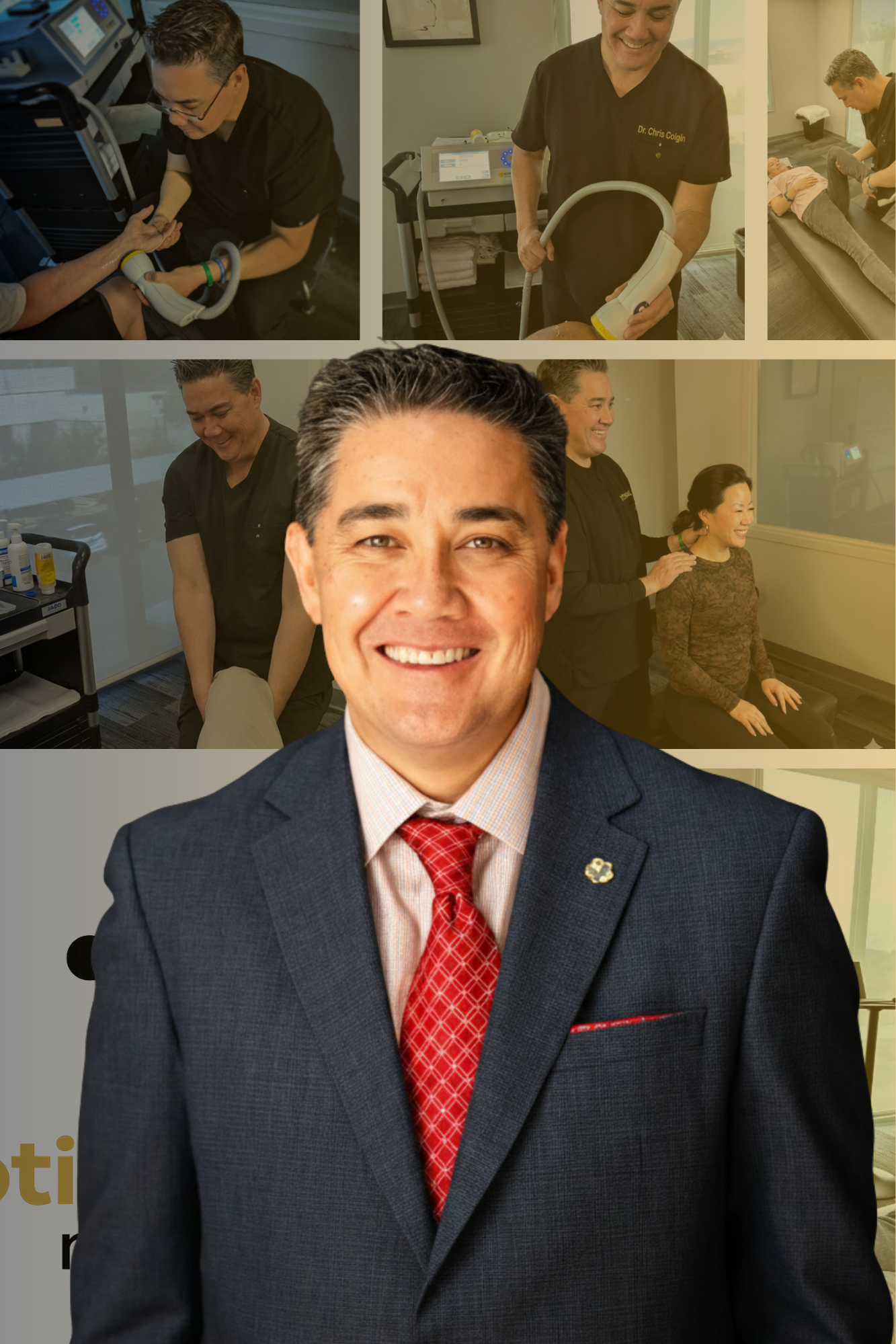
It is not a prescription medication, not an injectable, and not a clinical weight loss program. There's no ongoing lab monitoring or physician-adjusted dosing built into the product itself. A 4-bottle supply is $289 and includes a free consultation and a computerized Body Composition Analysis with Dr. Chris Colgin, DC, a licensed chiropractic physician who has practiced since 1996. The product was formulated by Dr. Dan Gubler, a Caltech-trained PhD organic chemist.
What Is Ozempic?
Ozempic is a brand name for semaglutide, a prescription medication approved by the FDA that mimics the GLP-1 hormone your body produces naturally. It's administered by injection and requires a prescription, meaning it involves physician oversight, dosing adjustments, and typically some form of medical monitoring over the course of treatment. It was originally developed for type 2 diabetes management and later approved under the brand name Wegovy for chronic weight management.
Mechanism: How They Actually Work
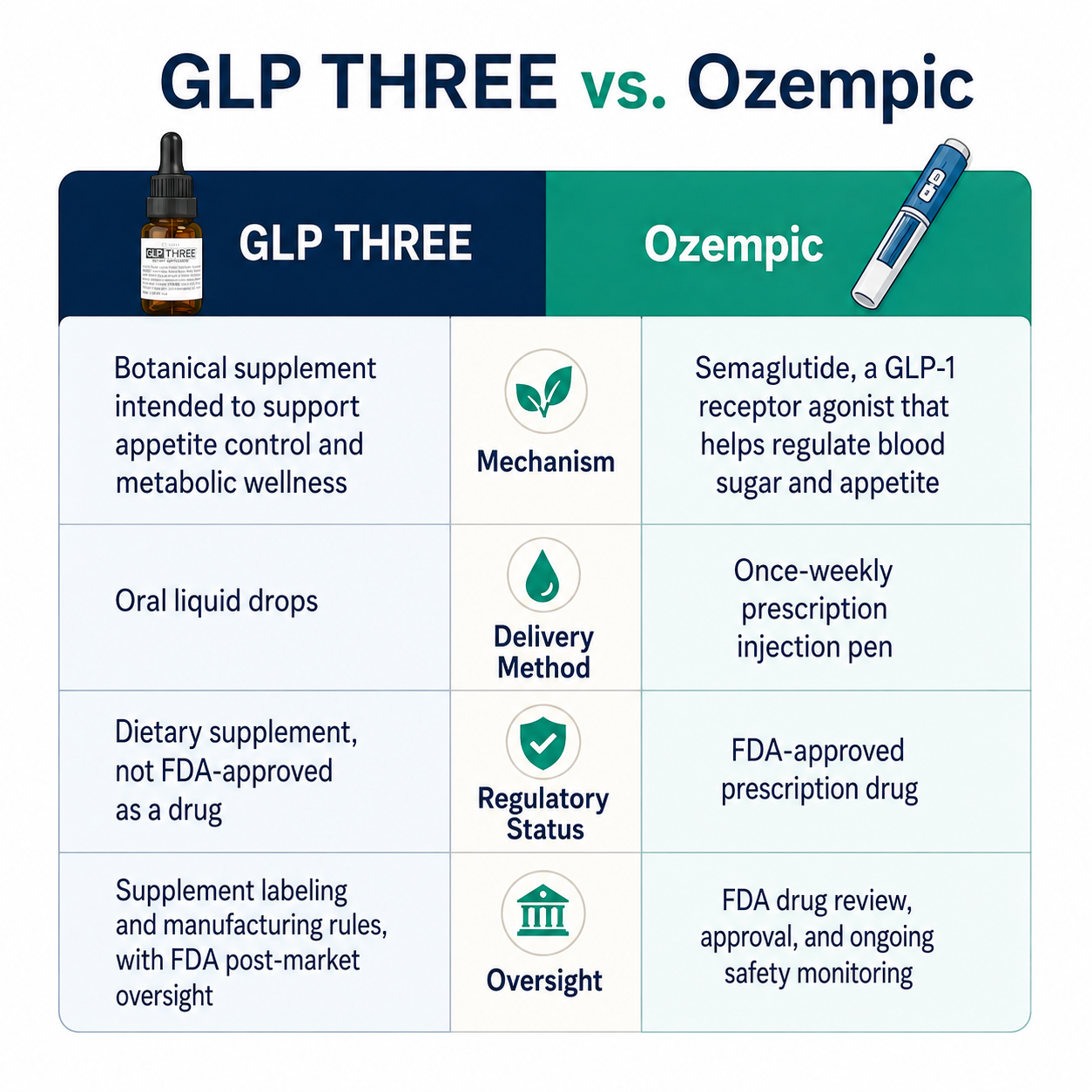
This is the most important distinction. GLP THREE is formulated with natural ingredients intended to support the body's own existing GLP-1 pathway and related metabolic processes. It does not introduce a synthetic hormone into the body.
Semaglutide, the active ingredient in Ozempic, is a synthetic compound engineered in a lab to closely resemble and activate the GLP-1 receptor directly, producing a stronger, more direct pharmacological effect on appetite and blood sugar regulation. That direct receptor activation is also why it requires a prescription and medical supervision, since it is a drug with a defined dosing protocol and documented side effect profile.
Because of this difference in mechanism, GLP THREE should not be expected to produce the same clinical effects as semaglutide, and it is not marketed or intended as a substitute for prescription treatment.
Regulatory Status
Ozempic is an FDA-approved prescription drug. GLP THREE is a dietary supplement, which falls under a different regulatory category than prescription medications and is not evaluated by the FDA in the same way. This is a meaningful distinction, not just a technicality, since it affects everything from how the product can be marketed to what oversight applies to its use.
Delivery Method
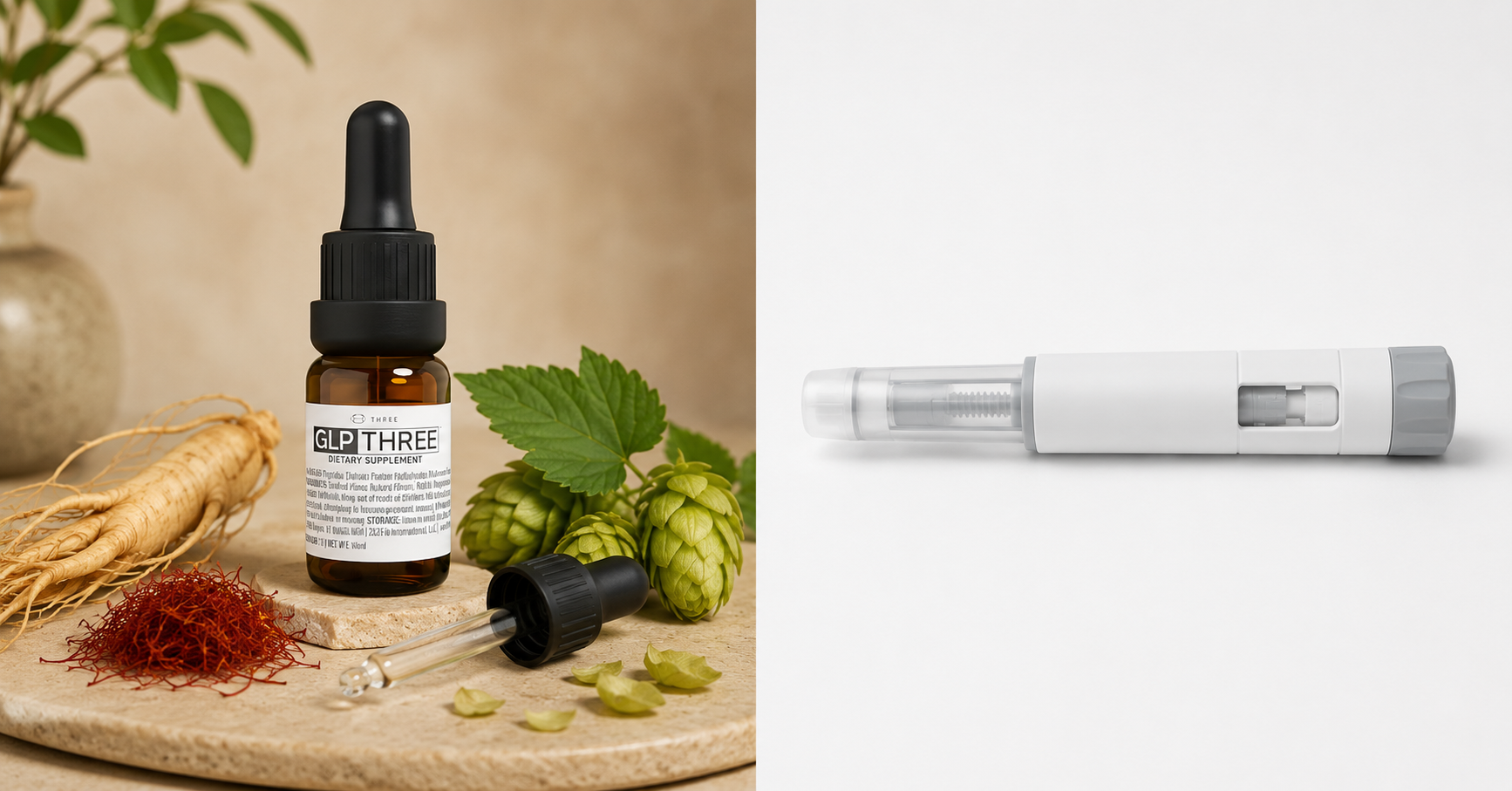
Ozempic is self-injected on a weekly schedule using a prefilled pen. GLP THREE is taken orally via dropper, with no needles involved.
Cost and Access Comparison
Prescription GLP-1 medications typically involve consultation with a physician, ongoing prescriptions, and in many cases a monthly cost that can run into the hundreds of dollars depending on insurance coverage. GLP THREE is purchased directly as a 4-bottle supply for $289, which includes a free consultation and a computerized Body Composition Analysis with Dr. Colgin. There's no prescription requirement and no ongoing lab work built into the purchase itself.
What Happens When You Stop Taking Ozempic?
One reason people look into alternatives is what happens after semaglutide treatment ends. Research published in Diabetes, Obesity and Metabolism following participants after they discontinued semaglutide found that a substantial portion of the weight lost during treatment tends to return over the following months, since the medication's appetite-suppressing effect fades once it's out of the system. This is a documented pattern with GLP-1 receptor agonists generally, and it's worth discussing with your doctor if you're weighing long-term options.
This is also where the conversation about ongoing, natural support for metabolism tends to come up. GLP THREE is not positioned as a way to replicate semaglutide's effects or replace a prescription protocol. It's formulated as ongoing support for the body's own GLP-1 pathway and metabolic function as part of an active lifestyle, for people who are not on, or are not candidates for, prescription treatment.
Common Side Effects Reported with Semaglutide
Commonly reported side effects of semaglutide include nausea, vomiting, diarrhea, and other gastrointestinal symptoms, particularly during dose escalation. Because GLP THREE does not introduce a synthetic hormone, it is not expected to carry the same side effect profile, though anyone starting a new supplement should still talk to their doctor first, especially if they take other medications.

Can You Take GLP THREE Instead of Ozempic?
This is a decision to make with your doctor, not a supplement marketing page. GLP THREE is not a substitute for prescription treatment when a physician has determined that medication is medically appropriate for you. It's formulated as a natural option to support metabolic health, appetite signaling, and healthy weight management for people looking for a non-prescription approach as part of an active lifestyle. If you're currently on semaglutide or another prescription GLP-1 medication, talk to your prescribing doctor before making any changes.
Frequently Asked Questions
Does GLP THREE contain semaglutide? No. GLP THREE does not contain semaglutide or any synthetic hormone. It's formulated with natural ingredients, including a patented MBC-267 peptide complex, Panax Ginseng, Saffron, and Hops extract.
Is GLP THREE as strong as Ozempic? GLP THREE and Ozempic work through different mechanisms and are not designed to produce equivalent effects. Ozempic is a prescription drug with a synthetic hormone that directly activates GLP-1 receptors; GLP THREE is a supplement designed to support the body's own existing pathway.
Do I need a prescription for GLP THREE? No. GLP THREE is a dietary supplement and does not require a prescription. It's taken via dropper, with no injections involved.
Can I take GLP THREE if I've stopped Ozempic? Many people look into natural options after finishing a prescription protocol. Whether GLP THREE is right for you depends on your individual health situation, so it's worth discussing with your doctor.
What's included when I buy GLP THREE? A 4-bottle supply is $289 and includes a free consultation and a computerized Body Composition Analysis with Dr. Chris Colgin, DC.
A Note on Dr. Colgin and the Formulation Team
Dr. Chris Colgin, DC, has practiced as a licensed chiropractic physician since 1996 and serves as Director of Optimal Health Members. He offers the free consultation and Body Composition Analysis included with a GLP THREE purchase. The product itself was formulated by Dr. Dan Gubler, a Caltech-trained PhD organic chemist.
These statements have not been evaluated by the Food and Drug Administration. This product is not intended to diagnose, treat, cure, or prevent any disease. Individual results may vary. Talk to your doctor before starting any new supplement.

Ready to Learn More?
If you're weighing your options between prescription medication and a natural approach, understanding the difference between GLP THREE and Ozempic is a good first step. You can view full product details and pricing on the GLP THREE order page, or reach out to learn more about becoming an ambassador if you'd like to share it with others.