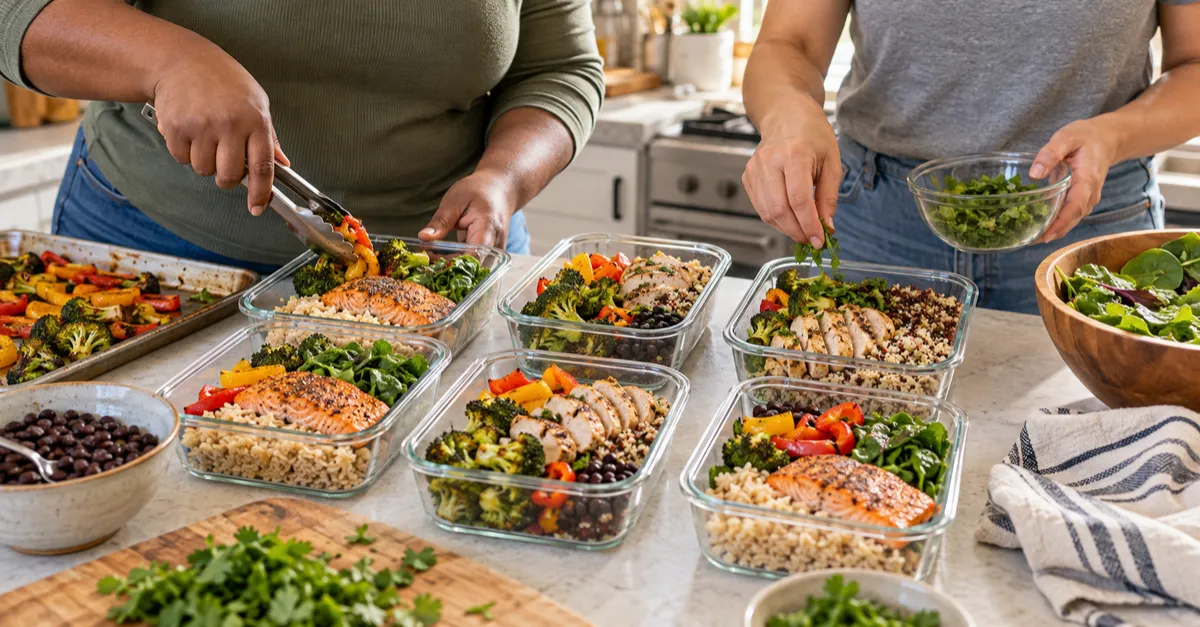
Healthy Meal Prep for Weight Loss: Where Do You Start?
It is 6:45 on a Wednesday evening. You are tired, hungry, and the only fast option between you and dinner is a drive-thru or a box from the freezer aisle. You meant to eat well this week. The plan just did not survive the week.
That moment, not a lack of willpower, is where most weight management efforts quietly fall apart. Healthy meal prep for weight loss exists to solve exactly that problem: it moves your food decisions to a calm hour on the weekend so that on Wednesday night, the easy choice and the good choice are the same choice.
Quick Answer: Healthy meal prep for weight loss means cooking a few balanced meals ahead, once or twice a week, so the easiest option during a busy day is a nourishing one. Build each container around lean protein, plenty of vegetables, a modest portion of whole grains or beans, and a little healthy fat, then refrigerate it for up to four days.
Key Takeaways
In a study of more than 40,000 adults, people who planned meals ahead had better overall diet quality and lower odds of obesity than people who did not plan.
U.S. adults who cooked dinner at home six or seven nights a week ate fewer daily calories and less sugar than those who rarely cooked.
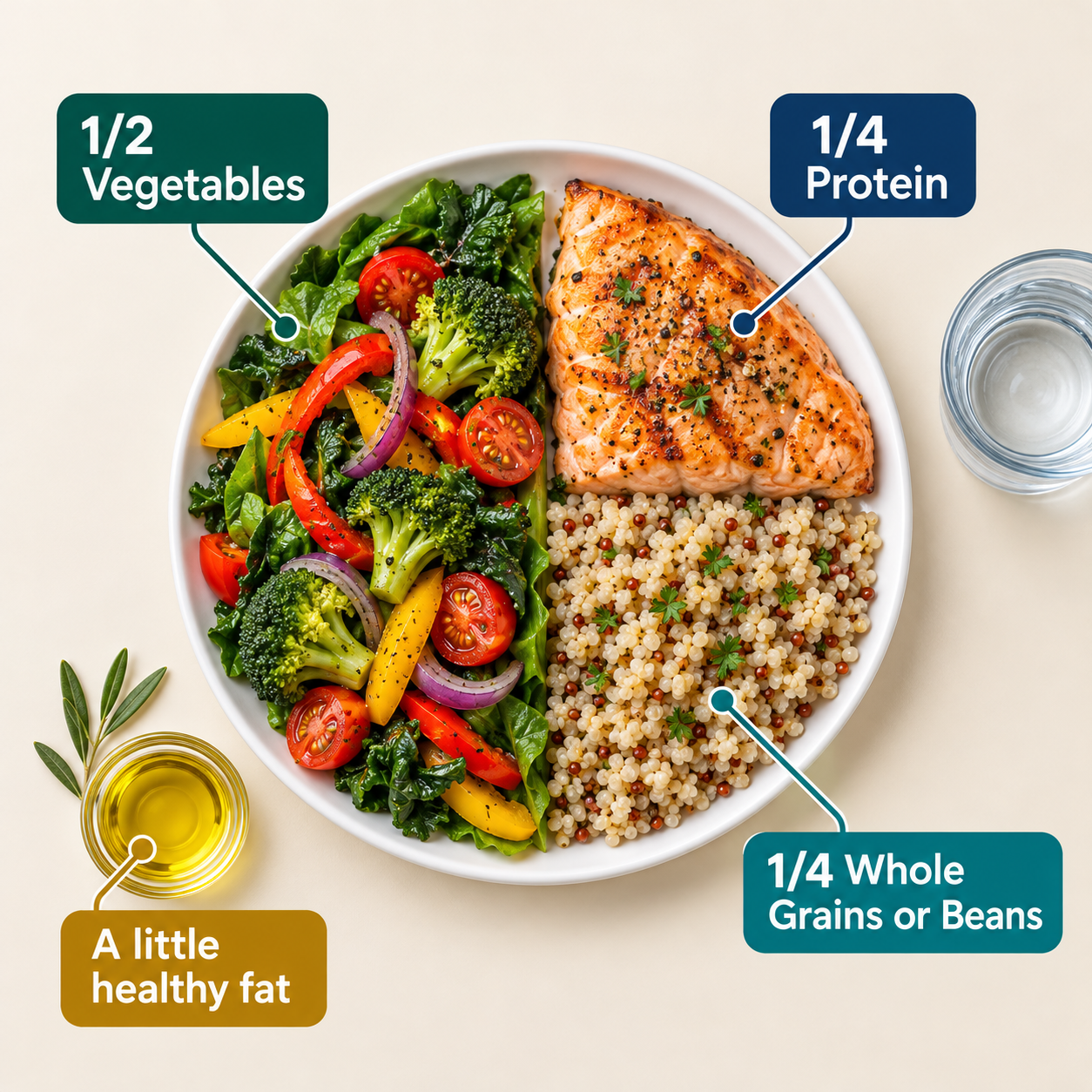
A balanced prep container is roughly half vegetables, one quarter protein, and one quarter whole grains or beans.
Protein and fiber are the two nutrients that most reliably help a meal keep you full.
Cooked meal prep stays safe in the refrigerator for 3 to 4 days and in the freezer for 3 to 4 months.
Does Meal Prep Actually Help With Weight Loss?
Meal prep is not magic. It is a structure. And the research on structure is encouraging.
A large French study published in the International Journal of Behavioral Nutrition and Physical Activity looked at more than 40,000 adults and found that people who planned their meals ahead had higher diet quality, more food variety, and lower odds of obesity than people who did not. The researchers were careful to note the study shows an association, not proof of cause. Still, the pattern is consistent with what most people experience: when you decide what you will eat before you are hungry, you tend to eat better.
Cooking at home matters too. A Johns Hopkins analysis of national survey data found that adults who cooked dinner at home six or seven times a week consumed fewer total calories, less fat, and less sugar than adults who cooked once a week or less. That held true whether or not they were actively trying to lose weight. Meal prep is simply home cooking, batched.
The third piece of evidence is the most striking. In a tightly controlled inpatient trial at the NIH Clinical Center, 20 adults spent two weeks on a diet of ultra-processed foods and two weeks on a diet of minimally processed foods, eating as much or as little as they wanted. On the ultra-processed diet, participants ate about 500 more calories per day and gained weight; on the minimally processed diet, they lost weight. The meals were matched for calories, sugar, fat, and fiber on the plate. The difference was in how much people chose to eat.
That is the quiet advantage of meal prep. When the food waiting in your refrigerator is real food you cooked yourself, you are far less likely to default to the packaged, ultra-processed options that make overeating easy.
What Should a Weight Loss Meal Prep Container Look Like?
You do not need to count every calorie to meal prep well. You need a template you can repeat without thinking.
The most practical template I know is the Healthy Eating Plate from the Harvard T.H. Chan School of Public Health. It recommends filling half the plate with vegetables and fruit, one quarter with whole grains, and one quarter with healthy protein, using healthy oils in moderation and drinking water instead of sugary drinks. That ratio translates directly into a meal prep container.
Lean Protein: One Quarter of the Container
Protein is the anchor of a filling meal. A review in the American Journal of Clinical Nutrition concluded that higher-protein diets can improve appetite control and help preserve lean muscle during weight loss. Lean muscle matters because it is metabolically active tissue, so protecting it is an important goal during any weight loss effort.
Good batch-cooking proteins include:
Baked or grilled salmon and other fish
Chicken or turkey breast
Eggs, hard-boiled or baked into egg muffins
Lean ground turkey or beef
Beans, lentils, tofu, or tempeh
Plain Greek yogurt or cottage cheese for breakfast and snacks
Vegetables: Half the Container
Vegetables add volume, color, and fiber for very few calories, which is why they earn the largest share of the container. Roast sheet pans of broccoli, peppers, zucchini, cauliflower, carrots, or Brussels sprouts. Keep raw options like cucumbers, cherry tomatoes, and leafy greens on hand for salads and snacks. Note that Harvard's guidance does not count potatoes as a vegetable portion.
Whole Grains or Beans: One Quarter of the Container
Whole grains and beans provide steady energy and more fiber than refined starches. Brown rice, quinoa, farro, oats, whole wheat pasta, and lentils all hold up well in the refrigerator. Keep this portion modest, about a quarter of the container, rather than eliminating it entirely. Restrictive plans that cut out whole food groups are often the hardest to sustain.
Healthy Fat and Flavor
A drizzle of olive oil, a few slices of avocado, a sprinkle of nuts or seeds, or a spoonful of hummus makes meals more satisfying. Use herbs, spices, citrus, garlic, salsa, and vinegar generously. Meal prep fails fast when the food is bland.
Why Do Protein and Fiber Matter So Much for Appetite?
Hunger is not just a feeling in your stomach. It is a conversation between your gut and your brain, carried by hormones.
One of those hormones is GLP-1 (glucagon-like peptide-1). According to a comprehensive review in Physiological Reviews, GLP-1 is produced by specialized cells in the intestine, released after you eat, and appears to act as a natural regulator of appetite and food intake. It is part of how your body signals that a meal has arrived and that you are getting full.
This is why the composition of your prep containers matters more than any single "fat-burning" food. Meals built around protein and fiber tend to keep people satisfied longer, which makes the next decision easier.
Fiber deserves special attention because it is so simple. In a 12-month randomized trial published in the Annals of Internal Medicine, adults with metabolic syndrome who were simply coached to eat more fiber lost an average of about 2.1 kg (roughly 4.6 pounds), close to the 2.7 kg lost by a group following a more complex multi-part dietary plan. The researchers suggested that a single, simple goal may be a reasonable option for people who struggle with complicated diets.
That finding is the heart of good meal prep. The best plan is not the most elaborate one. It is the one you will still be following in March.
How Do You Meal Prep for Weight Loss in About Two Hours?
Here is a straightforward weekly routine. Most people can finish it in an afternoon once it becomes familiar.
Pick a prep day and a backup day. Sunday works for many people, with a smaller top-up on Wednesday so nothing sits in the refrigerator longer than it safely should.
Choose two proteins, two or three vegetables, and one grain. Variety within a small menu keeps meals interesting without turning prep into a full-time job. For example: salmon and chicken, broccoli and roasted peppers, brown rice.
Write a short grocery list and shop once. Plan around the template, not around recipes. If the list fits on an index card, you are doing it right.
Cook in parallel. Start the grain on the stove, put two sheet pans of vegetables in the oven, and bake or grill the proteins at the same time. Hard-boil a dozen eggs while everything else cooks.
Cool quickly, then portion. Divide food into shallow containers so it cools fast, then build each container with the half, quarter, quarter template.
Label and date everything. A strip of masking tape and a marker take ten seconds and remove all the guesswork about what to eat first.
Prep your snacks too. Cut vegetables, portion nuts, and set out Greek yogurt cups. The 3 p.m. vending machine is where many good days go sideways.
Why Do Most Meal Prep Plans Fall Apart by Wednesday?
If you have tried meal prep before and quit, you are in good company. The plan usually breaks for predictable reasons, and every one of them is fixable.
The food is boring. Five identical containers of plain chicken and steamed broccoli will not survive the week. Rotate sauces and spices: the same chicken can become a lemon-herb bowl on Monday, a salsa and black bean bowl on Tuesday, and a sesame-ginger stir-fry on Wednesday.
The plan is too ambitious. Cooking fourteen different recipes on a Sunday is a recipe for burnout. Start by prepping only lunches for the workweek. Once that feels automatic, add breakfasts or dinners.
The plan is too restrictive. Containers that leave you hungry by mid-afternoon set you up for an evening of grazing. If you are consistently hungry, add protein or vegetables before cutting anything else.
Life happens. A late meeting, a sick child, a dinner invitation. Meal prep is not a contract. A missed day does not erase a good week. Freeze what you will not get to and pick the routine back up at the next meal.
The goal is not perfection. It is making the healthy option the default option often enough that it adds up.
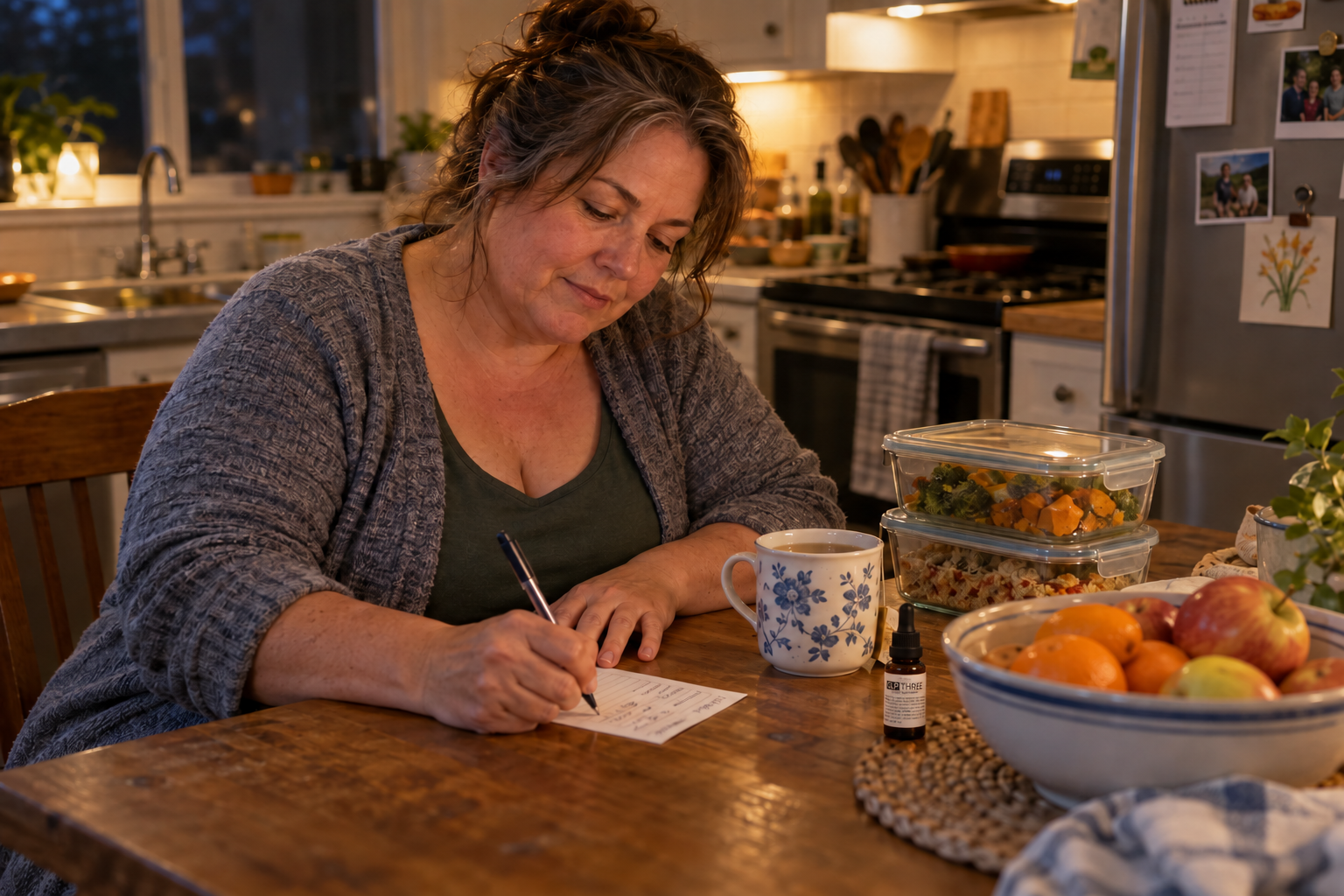
How Long Does Meal Prep Last in the Fridge?
Food safety is the part of meal prep people skip, and it matters. According to the USDA Food Safety and Inspection Service:
Refrigerate within 2 hours of cooking (within 1 hour if the room is above 90°F).
Use cooked leftovers within 3 to 4 days when stored in the refrigerator.
Frozen leftovers stay safe for 3 to 4 months for best quality, though they remain safe longer if kept frozen.
Cool food fast by dividing large batches into shallow containers instead of refrigerating one big pot.
Reheat to 165°F, covering the food so it heats evenly.
This is why a two-day prep rhythm (Sunday and Wednesday) works so well. It keeps every meal within the safe window. If you prefer to cook once a week, freeze the Thursday and Friday portions and move them to the refrigerator the night before.
What Does a Sample Weight Loss Meal Prep Week Look Like?
Use this as a starting point, not a prescription. Adjust portions to your appetite, activity level, and any guidance from your own physician.
Meal | Monday to Wednesday (prepped Sunday) | Thursday to Friday (prepped Wednesday) |
|---|---|---|
Breakfast | Baked egg muffins with spinach and peppers, plus berries | Overnight oats with Greek yogurt, chia seeds, and fruit |
Lunch | Salmon, roasted broccoli, and brown rice with lemon and olive oil | Turkey chili with beans, side of greens |
Dinner | Sheet pan chicken with roasted vegetables and quinoa | Shrimp or tofu stir-fry with mixed vegetables and brown rice |
Snacks | Cut vegetables with hummus, a small handful of almonds | Cottage cheese with cucumber, an apple with nut butter |
A few practical notes: salmon and fish taste best when eaten within the first two days, so place them early in the rotation. Soups, chilis, and grain bowls freeze well. Salads stay crisp if you store dressing separately.
Where Does a Supplement Fit Into Meal Prep?
Let's be clear about the order of operations. The foundation of healthy weight management is what you eat, how you move, how you sleep, and how consistently you do those things. No supplement replaces a refrigerator stocked with real food.
That said, some people look for additional support for appetite and metabolic health alongside those habits. GLP THREE is a natural liquid dropper supplement formulated to support the body's own GLP-1 pathway, healthy appetite signaling, fat metabolism, blood sugar levels already within a normal range, and lean muscle maintenance as part of an active lifestyle.
It contains a patented MBC-267 peptide complex derived from salmon from the Norwegian Sea and select mushrooms, along with Panax ginseng extract, saffron extract, and hops (Humulus lupulus) extract. It was formulated by Dr. Dan Gubler, a Caltech-trained PhD organic chemist.
A few things worth stating plainly:
GLP THREE is a dietary supplement, not a prescription medication and not an FDA-approved drug.
It does not contain semaglutide or any synthetic hormone, and it is not an alternative form of Ozempic, Wegovy, or any other prescription GLP-1 medication. Those drugs work through a different mechanism and are prescribed and monitored by a physician.
It is taken by dropper. No prescription and no injections are involved.
It is not a clinical program. There is no lab monitoring or physician-adjusted dosing built into the product.
A 4-bottle supply is $289 and includes a one-time free consultation and a computerized Body Composition Analysis with me. I have practiced as a licensed chiropractic physician since 1996 and direct Optimal Health Members in Las Vegas. The Body Composition Analysis is useful in a meal prep context because it shows more than a number on a scale. It gives you a snapshot of lean mass and body fat, which helps you see whether your eating habits are supporting muscle as well as fat loss.
If you take medications or have a health condition, talk with your own doctor before adding any supplement to your routine.
Frequently Asked Questions
How many days ahead can you meal prep for weight loss?
Most cooked meals are safe in the refrigerator for 3 to 4 days, according to the USDA. For a full workweek, prep twice (for example Sunday and Wednesday) or freeze the later portions and thaw them in the refrigerator the night before you plan to eat them.
Do you have to count calories to meal prep for weight loss?
Not necessarily. Many people do well using a simple container template: half vegetables, one quarter lean protein, and one quarter whole grains or beans, with a little healthy fat. If progress stalls, tracking portions for a week or two can help you see where adjustments might be useful.
What are the best foods to meal prep for weight loss?
Foods that reheat well and keep you full work best: salmon, chicken, turkey, eggs, beans, and lentils for protein; roasted broccoli, peppers, zucchini, and leafy greens for vegetables; and brown rice, quinoa, oats, or farro for whole grains. Add flavor with herbs, spices, citrus, and sauces.
Can you freeze meal prep meals?
Yes. Soups, chilis, stews, grain bowls, and cooked proteins freeze well and stay at best quality for 3 to 4 months, per USDA guidance. Thaw them in the refrigerator, cold water, or microwave, and reheat to 165°F. Delicate salad greens and raw vegetables do not freeze well.
Can a supplement replace meal prep for weight loss?
No. A supplement can be one part of a healthy routine, but it does not replace balanced meals, physical activity, and sleep. GLP THREE, for example, is formulated to support appetite signaling and metabolic health as part of an active lifestyle, not as a substitute for good nutrition.
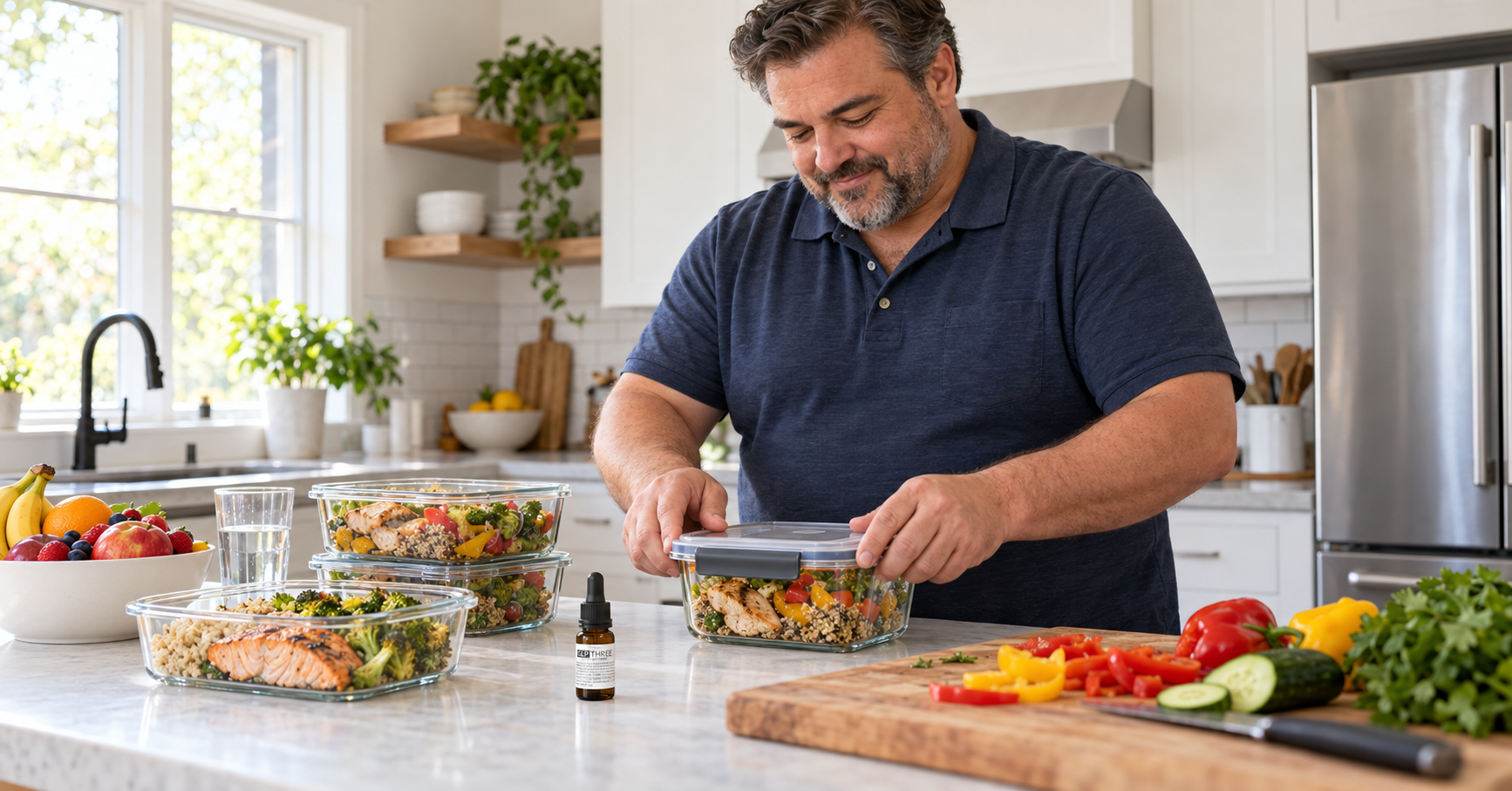
Start With One Week
You do not need a perfect plan. You need a first week. Pick two proteins, a few vegetables, and one grain. Cook them on Sunday. Build your containers with the half, quarter, quarter template. Then notice how different Wednesday night feels when dinner is already waiting.
If you would like additional support for appetite and metabolic health alongside the habits in this guide, you can learn more about GLP THREE and order here. Your purchase includes a one-time free consultation and Body Composition Analysis, so you can see what your body composition looks like as you build these habits.
Good weight management is rarely decided in the moment. It is decided ahead of time, one container at a time.
These statements have not been evaluated by the Food and Drug Administration. This product is not intended to diagnose, treat, cure, or prevent any disease. Individual results may vary. Talk to your doctor before starting any new supplement.