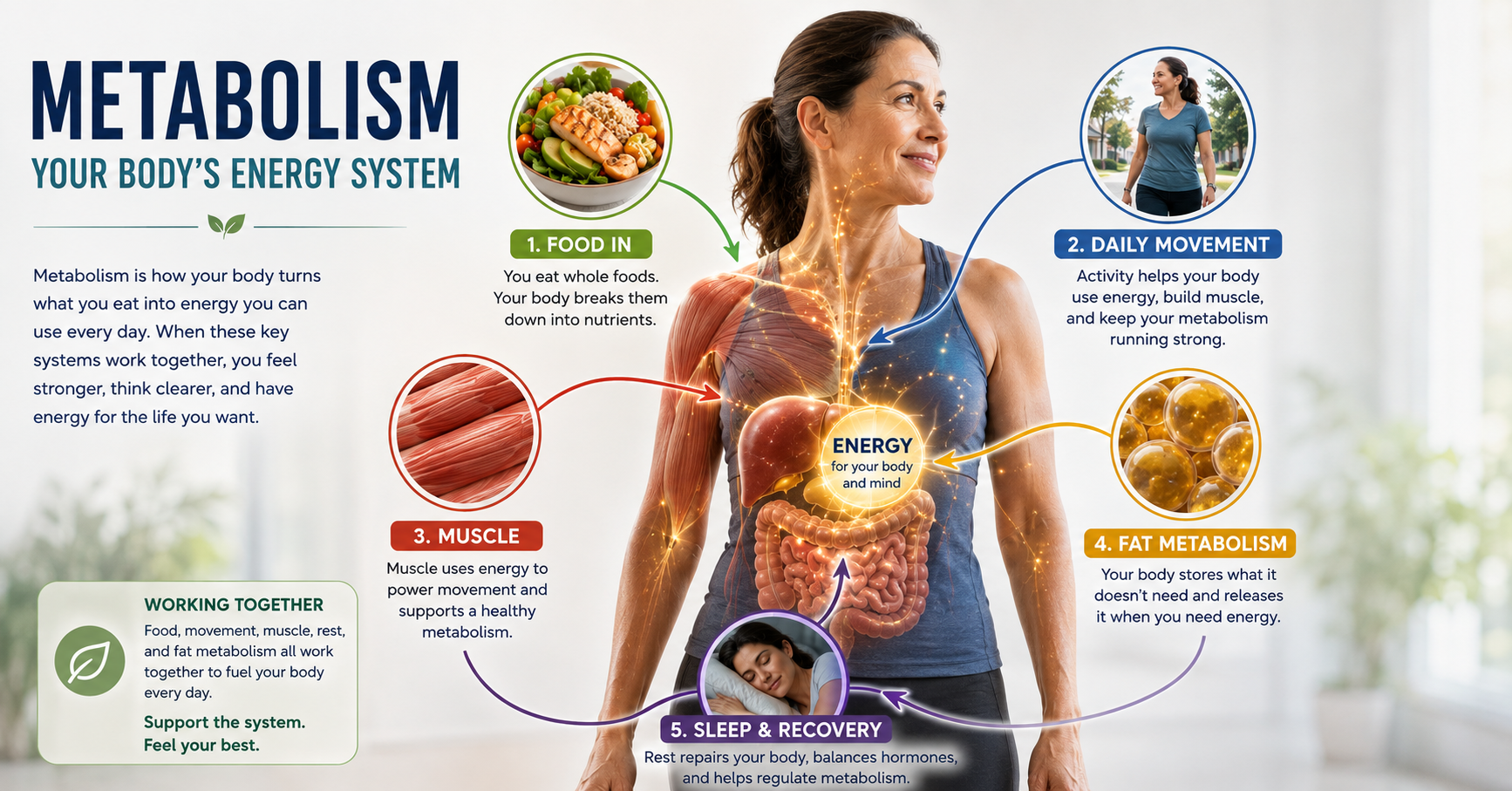
How to Boost Metabolism Naturally?
If your metabolism feels slower than it used to, it is tempting to search for one food, supplement, or trick that will suddenly speed it up.
Metabolic health does not work quite that way.
Your metabolism is influenced by multiple factors, including your body composition, physical activity, nutrition, sleep, age, and genetics. The more useful question is not simply, "How do I make my metabolism faster?" It is, "How can I support healthier metabolic function naturally?"
The goal is not to hack your metabolism. It is to create an environment where healthy metabolic function is supported consistently.
Quick Answer:
To boost metabolism naturally, prioritize resistance training, daily movement, adequate protein, whole foods, quality sleep, proper hydration, and sustainable eating habits. Maintaining lean muscle is especially important as you age. Supplements may complement these habits, but they should support your metabolic foundation rather than replace nutrition, movement, and sleep.
Key Takeaways
Building and maintaining muscle can support resting energy expenditure.
Protein has a higher thermic effect than dietary fat and can support fullness and lean muscle.
Everyday movement matters in addition to formal exercise.
Poor sleep can affect appetite regulation and metabolic health.
Extreme dieting can work against long-term body composition goals.
Supplements should complement healthy behaviors, not replace them.
What Does Your Metabolism Actually Do?
Your metabolism is not one organ or one switch that is either "fast" or "slow."
It is the collection of chemical processes your body uses to keep you alive and functioning. That includes breathing, circulating blood, repairing tissue, digesting food, regulating body temperature, moving your muscles, and producing energy.
Your total daily energy expenditure generally comes from several areas:
Resting energy expenditure: The energy required to keep your body functioning at rest.
Physical activity: Exercise plus all the movement you accumulate throughout the day.
Thermic effect of food: The energy your body uses to digest, absorb, and process food.
Adaptive changes: Your body can adjust energy expenditure in response to factors such as changes in food intake, activity, and body weight.
This is why metabolism is more complicated than simply eating a particular "fat-burning" food.
What you do repeatedly matters much more.
Does Building Muscle Boost Metabolism?
Muscle deserves special attention when talking about metabolic health.
Resistance training helps preserve and build lean tissue. Research examining exercise and resting metabolism has found that resistance training may increase resting metabolic rate, although the size of the effect varies among individuals and studies.
The bigger reason to care about muscle is not that every pound of muscle suddenly burns hundreds of extra calories.
It does not.
The real benefit is that maintaining muscle supports physical function, strength, healthy aging, body composition, and your ability to remain active.
That becomes increasingly important as the years pass.
You do not need to become a bodybuilder.
Two or more well-designed strength sessions each week can be a practical place to start for many adults. Exercises can include:
Squats or sit-to-stand movements
Rows
Push-ups or presses
Lunges or step-ups
Hip hinges
Resistance bands
Free weights
Weight machines
The appropriate exercise program depends on your health, experience, injuries, and physical ability.
Does Eating More Protein Increase Metabolism?
Protein has an interesting metabolic advantage.
Your body expends energy digesting and processing everything you eat. This is known as the thermic effect of food.
Research indicates that protein is generally more thermogenic than the other macronutrients. A systematic review and meta-analysis found that higher-protein meals can produce greater diet-induced thermogenesis than lower-protein meals.
Protein also helps provide the raw materials needed to maintain and repair muscle.
That does not mean eating unlimited amounts of protein will continually speed up your metabolism.
More is not automatically better.
Instead, consider including a quality protein source with your meals, such as:
Eggs
Fish
Poultry
Lean meats
Greek yogurt or cottage cheese
Beans and lentils
Tofu or tempeh
Other minimally processed protein sources
Your ideal intake depends on your body size, activity level, age, goals, and medical circumstances.
If you have kidney disease or another condition that affects your dietary needs, discuss significant changes in protein intake with your healthcare professional.
Stop Looking Only at Exercise and Start Looking at Movement
A one-hour workout does not erase an otherwise sedentary day.
Walking around the office, standing up, doing household work, taking the stairs, gardening, carrying groceries, and simply moving more frequently all require energy.
This everyday activity can add up.
Try simple strategies such as:
Walk for 10 minutes after a meal.
Take phone calls while standing or walking.
Use stairs when practical.
Break up long periods of sitting.
Park slightly farther from your destination.
Take an evening walk instead of immediately sitting on the couch.
You do not necessarily need harder exercise.
Sometimes you simply need more movement.
Can Sleep Affect Your Metabolism?
Sleep is one of the most overlooked pieces of metabolic health.
It is easy to focus on calories and exercise while treating sleep as optional.
Your body disagrees.
In addition, a randomized clinical trial highlighted by the National Institutes of Health found that adults with overweight who increased their sleep duration consumed fewer calories on average than participants who did not extend their sleep.
That does not mean sleeping longer automatically causes weight loss.
It does mean that sleep can influence some of the systems involved in appetite and energy balance.
For most adults, building toward at least seven hours of quality sleep per night is a reasonable goal.
Helpful habits include:
Keeping a consistent bedtime
Reducing late-night screen exposure
Keeping your bedroom cool and dark
Limiting late caffeine
Avoiding very large meals immediately before bed
Getting natural light earlier in the day

Can Eating Too Little Slow Your Metabolism?
This is where aggressive weight loss strategies can become counterproductive.
If your solution to a plateau is always to eat less and exercise more, eventually you may find yourself tired, hungry, less active, and struggling to maintain the plan.
Your body is designed to adapt.
Significant calorie restriction and weight loss can lead to compensatory changes in energy expenditure. At the same time, losing weight without protecting muscle can mean losing some lean tissue along with body fat.
That is one reason sustainable body composition strategies should include adequate nutrition and resistance training rather than focusing exclusively on eating as little as possible.
The goal should not be starvation.
The goal should be improving the quality of your nutrition while creating an eating pattern you can realistically maintain.
What Foods Naturally Support a Healthy Metabolism?
There is no single "metabolism food."
Chili peppers, green tea, coffee, and various spices are often marketed as metabolic accelerators. Some may temporarily influence energy expenditure, but these effects are generally modest.
Your overall eating pattern matters far more.
Build meals around foods such as:
Protein: Fish, eggs, poultry, lean meat, dairy, beans, lentils, and tofu.
High-fiber carbohydrates: Vegetables, fruit, beans, oats, potatoes, and minimally processed whole grains.
Healthy fats: Nuts, seeds, avocado, olives, and appropriate amounts of minimally processed oils.
Water: Proper hydration supports normal physiological function and can replace calorie-heavy beverages.
A plate containing protein, vegetables, fiber-rich carbohydrates, and healthy fats will usually do more for your overall nutrition than searching for an exotic ingredient that claims to "ignite" your metabolism.
What About Blood Sugar and Appetite Signals?
Metabolism involves more than calorie burning.
Your body continuously coordinates glucose availability, stored energy, hunger, fullness, hormones, digestive signals, and energy demands.
One of those signals is GLP-1, or glucagon-like peptide-1.
GLP-1 is a naturally occurring hormone involved in normal appetite and glucose regulation. It is produced within the body, particularly in response to food.
This biological pathway has received enormous attention because prescription medications such as semaglutide act on the GLP-1 receptor.
But supporting your body's normal metabolic biology and taking a prescription GLP-1 receptor agonist are not the same thing.
That distinction matters.
Where Does GLP THREE Fit Into a Natural Metabolism Strategy?
GLP THREE is a natural liquid dietary supplement formulated to support metabolic health and the body's natural GLP-1 pathway.
It is not Ozempic, Wegovy, semaglutide, or another prescription GLP-1 medication.
It contains a patented MBC-267 peptide complex derived from salmon from the Norwegian Sea and select mushrooms, along with:
Panax Ginseng Extract
Saffron Extract
Humulus Lupulus, or Hops, Extract
GLP THREE is formulated to support:
The body's natural GLP-1 pathway
Healthy appetite signaling
Blood sugar levels already within a normal range
Fat metabolism
Lean muscle maintenance as part of an active lifestyle
It is taken by dropper and requires no prescription or injections.
This should not be interpreted to mean GLP THREE produces effects equivalent to prescription GLP-1 medications. A dietary supplement and a prescription GLP-1 receptor agonist are fundamentally different products.
The FDA distinguishes dietary supplement structure/function claims from claims that a product diagnoses, treats, cures, or prevents disease. You can read the FDA's consumer guidance on dietary supplements here.
The most sensible way to think about a supplement is as one part of a broader metabolic health strategy, not as a replacement for nutrition, movement, strength training, or sleep.
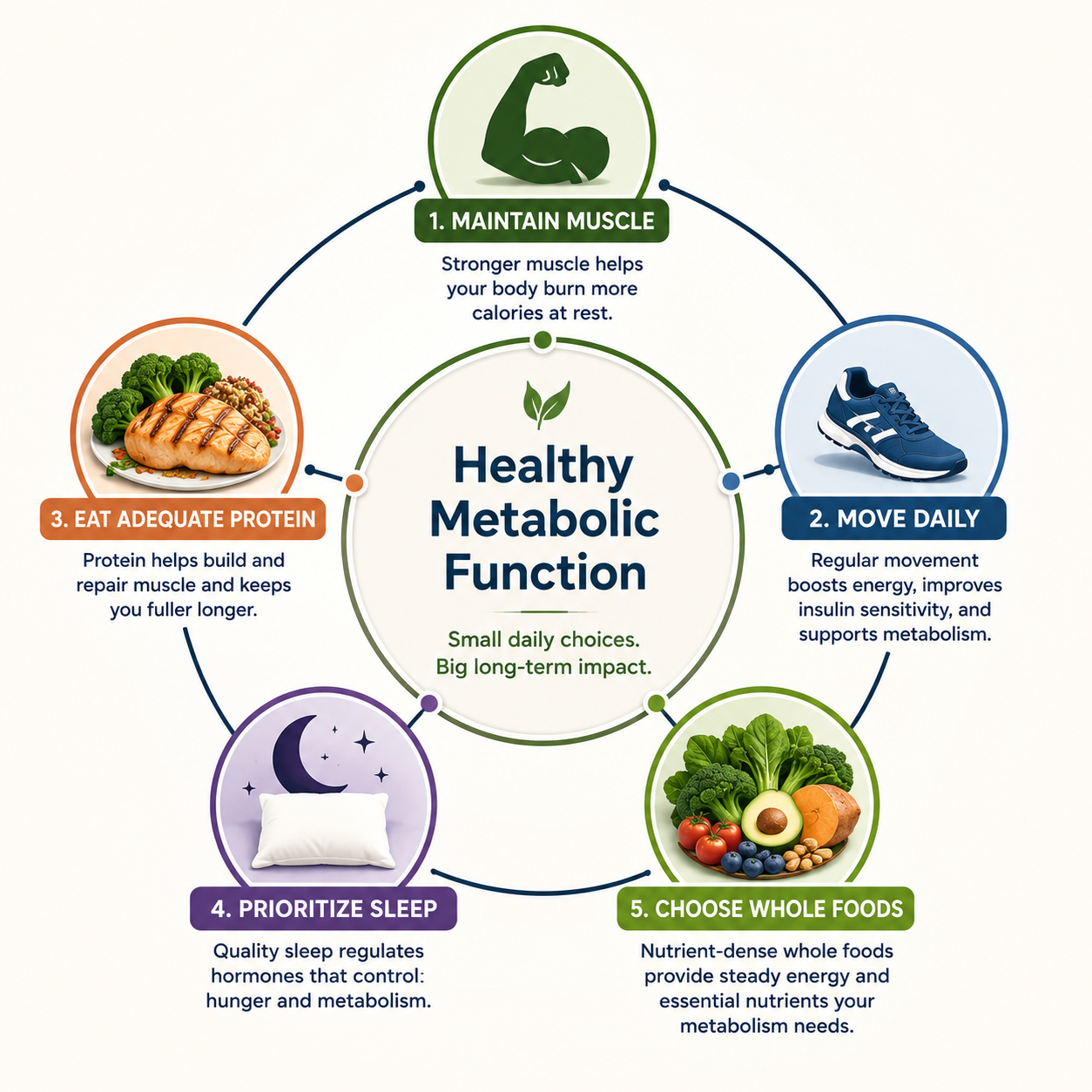
7 Ways to Support Your Metabolism Naturally
1. Strength Train Consistently
Protect and build lean muscle with resistance exercise appropriate for your ability.
2. Eat Adequate Protein
Include a quality protein source at your meals to support muscle maintenance and satiety.
3. Move Throughout the Day
Do not rely exclusively on structured workouts. Walking and frequent everyday movement count.
4. Prioritize Sleep
Aim for consistent, sufficient sleep rather than treating recovery as an afterthought.
5. Choose Mostly Whole Foods
Build your diet around protein, vegetables, fruits, fiber-rich carbohydrates, and healthy fats.
6. Avoid Extreme Dieting
A strategy you can maintain is generally more useful than repeatedly cycling through severe restriction.
7. Measure More Than Body Weight
The bathroom scale cannot tell you whether weight changes came from fat, muscle, or water.
Body composition provides additional information that body weight alone cannot.
This matters because losing pounds while sacrificing significant lean tissue is very different from improving body composition while protecting muscle.
How Do You Know Whether Your Metabolism Strategy Is Working?
Do not judge progress from one morning's scale reading.
Instead, look for trends.
Consider tracking:
Body weight over time
Waist circumference
Body composition
Strength
Energy levels
Hunger and appetite patterns
Sleep
Daily movement
How your clothes fit

Frequently Asked Questions About Boosting Metabolism Naturally
What is the fastest way to boost metabolism naturally?
There is no safe natural method that dramatically increases metabolism overnight. Resistance training, regular movement, adequate protein, sufficient sleep, and sustainable nutrition are more meaningful long-term strategies.
Does drinking water boost metabolism?
Drinking water supports normal body function and hydration, but water should not be viewed as a major metabolism booster. One practical benefit is that replacing caloric beverages with water can reduce unnecessary calorie intake.
Does protein increase metabolism?
Protein has a greater thermic effect than dietary fat and generally requires more energy to digest and process. Research supports a greater diet-induced thermogenic response following higher-protein meals.
Can you boost your metabolism after 50?
You can still influence important components of metabolic health after 50. Maintaining muscle through resistance training, staying physically active, eating adequate protein, and getting sufficient sleep become particularly important as you age.
Can a supplement boost your metabolism naturally?
Supplements may support aspects of normal metabolic function, depending on their ingredients and substantiated claims, but they should not be expected to override poor sleep, inadequate nutrition, low activity, or muscle loss.
GLP THREE is formulated to support metabolic health and the body's natural GLP-1 pathway, but it is not a prescription weight loss medication.
Stop Chasing a Faster Metabolism. Build a Healthier One.
The idea of "boosting your metabolism" is often marketed as though there is a secret switch waiting to be flipped.
There isn't.
Your metabolism responds to the environment you create for your body every day.
Build muscle.
Move often.
Eat quality food and adequate protein.
Sleep.
Give your body the nutrients it needs.
Then measure what is actually changing instead of relying entirely on the scale.
If you want to add nutritional support to those fundamentals, you can learn more and order GLP THREE here.
A four-bottle supply is $289 and includes a free consultation and computerized Body Composition Analysis with Dr. Chris Colgin.
GLP THREE does not require a prescription, injections, physician-adjusted dosing, ongoing laboratory monitoring, or bloodwork as part of the product itself.
These statements have not been evaluated by the Food and Drug Administration. This product is not intended to diagnose, treat, cure, or prevent any disease. Individual results may vary. Talk to your doctor before starting any new supplement.