Best Natural Appetite Suppressant: What the Research Says
does not come with a list of side effects longer than the label itself.
If you have spent any time searching for help with constant hunger or cravings, you already know the shelf is crowded. Fat burners, fiber blends, stimulant-heavy "diet pills," and now a wave of GLP-1 focused supplements all claim to be the answer. Most people asking this question are not looking for a gimmick. They are looking for something that works with their body instead of against it, does not require a prescription or an injection, and does not come with a list of side effects longer than the label itself.
Quick Answer:
A natural appetite suppressant is a supplement that uses plant extracts or compounds already found in the body, rather than a synthetic drug, to help regulate hunger signals. The most researched options include saffron extract, Panax ginseng, and ingredients that support the body's own GLP-1 pathway. None of these replace a prescription medication, but several have real clinical research behind their effects on appetite and satiety.
Key Takeaways
GLP-1 is a natural hormone your body already produces in the gut and brain, and it plays a direct role in hunger and fullness signals, according to Mayo Clinic research.
Saffron extract has been studied in multiple randomized, placebo-controlled trials and has shown measurable effects on appetite and satiety scores in adults.
Panax ginseng compounds have been shown in laboratory research to influence the same appetite-related neuropeptides involved in hunger regulation.
Natural appetite suppressants work by supporting the body's existing biology, not by introducing a synthetic hormone, which is a meaningful difference from prescription GLP-1 medications.
Not every ingredient marketed as a "natural Ozempic" has research to back that comparison, so it is worth checking what is actually studied before buying.
How Does Appetite Suppression Actually Work in the Body?
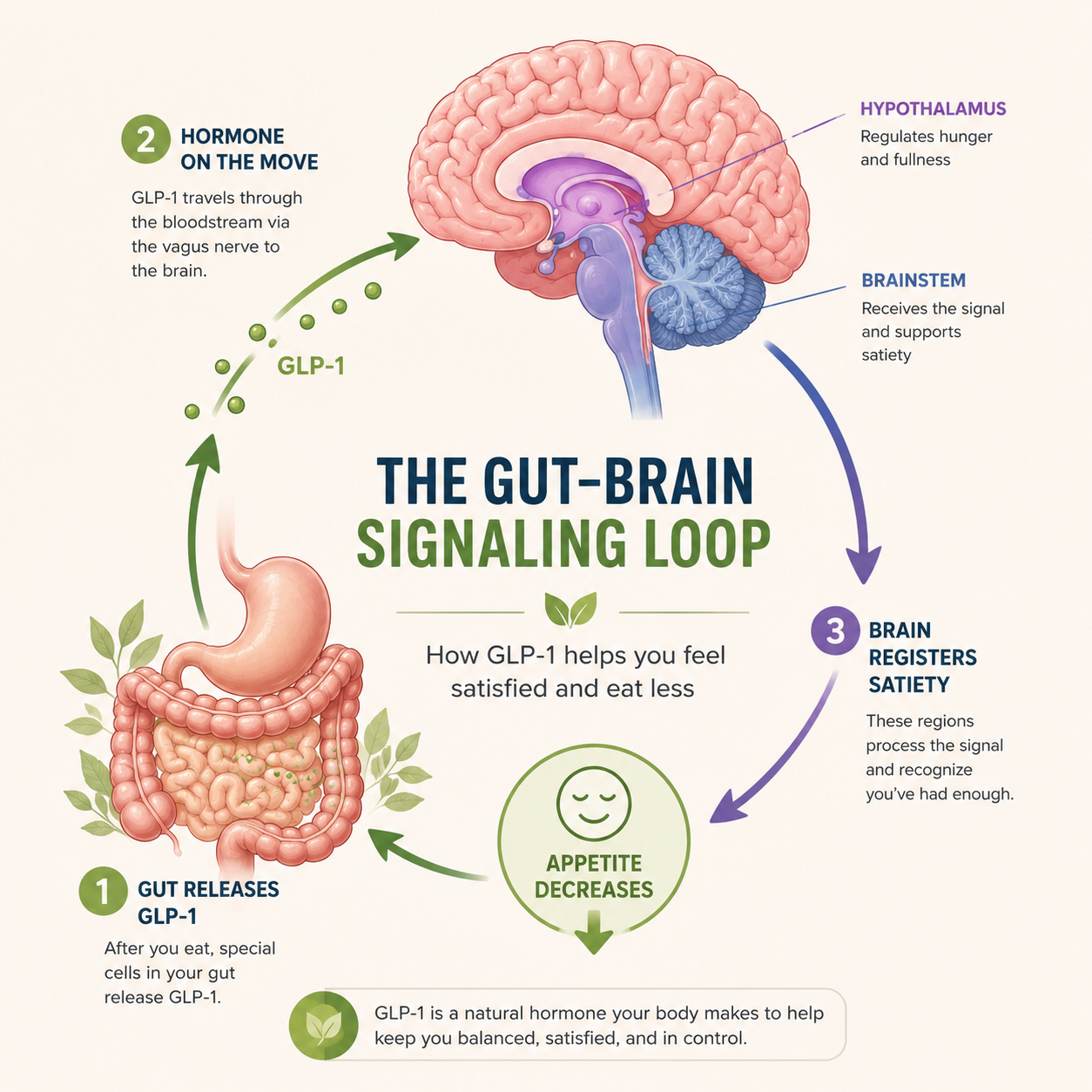
Hunger is not just willpower. It is a hormonal conversation happening between your gut and your brain every time you eat.
One of the central players in that conversation is GLP-1, or glucagon-like peptide 1. This is a hormone your body produces naturally in the intestinal lining and in certain neurons in the brainstem and hypothalamus. According to research summarized by Mayo Clinic, GLP-1 slows gastric emptying and acts directly on brain regions that regulate feeding, and it is the combined effect in both the gut and the brain that produces the sensation of satiety.
This is also the same pathway that prescription medications like semaglutide are designed to activate. As Mayo Clinic's patient education materials explain, semaglutide works by mimicking the natural GLP-1 hormone and binding to GLP-1 receptors in the brain, which reduces feelings of hunger and slows how quickly food leaves the stomach.
The distinction that matters for anyone comparing options: your body already makes GLP-1 on its own. Prescription drugs introduce a synthetic, long-acting version of that hormone. A natural appetite suppressant, by contrast, is formulated to support the systems and signaling your body already has, using ingredients rather than a synthetic hormone. That is a different mechanism, a different regulatory category, and a different experience, not an equivalent one.
Do Natural Appetite Suppressants Work as Well as Prescription Options?
This is the honest question most articles avoid answering directly, so let's answer it directly.
No credible natural supplement produces the same magnitude of appetite suppression as an injectable GLP-1 receptor agonist. Those medications introduce a synthetic hormone at a controlled, escalating dose under a prescription, and their clinical trials reflect that. A supplement, by definition, is not designed or regulated to do that.
What natural appetite suppressants can offer is more modest and still meaningful for a lot of people: support for the body's own satiety signaling, without a prescription, without an injection, and without the more significant side effect profile associated with pharmaceutical dosing. For someone who is not a candidate for prescription therapy, cannot access it, or simply wants to start with a non-drug approach before considering anything else, that is a legitimate and different path, not a shortcut to the same result.
Anyone comparing the two should be skeptical of language that implies otherwise. If a product claims to work "just like" or "mimic" a prescription medication's clinical results, that is a claim to question, not a claim to trust at face value.

What Natural Ingredients Are Backed by Research for Appetite Control?
Not all "natural appetite suppressants" are created equal. Some are marketing terms with no research behind them. A few have real, published, peer-reviewed data. Here is what the research actually shows for two of the more studied options.
Saffron Extract
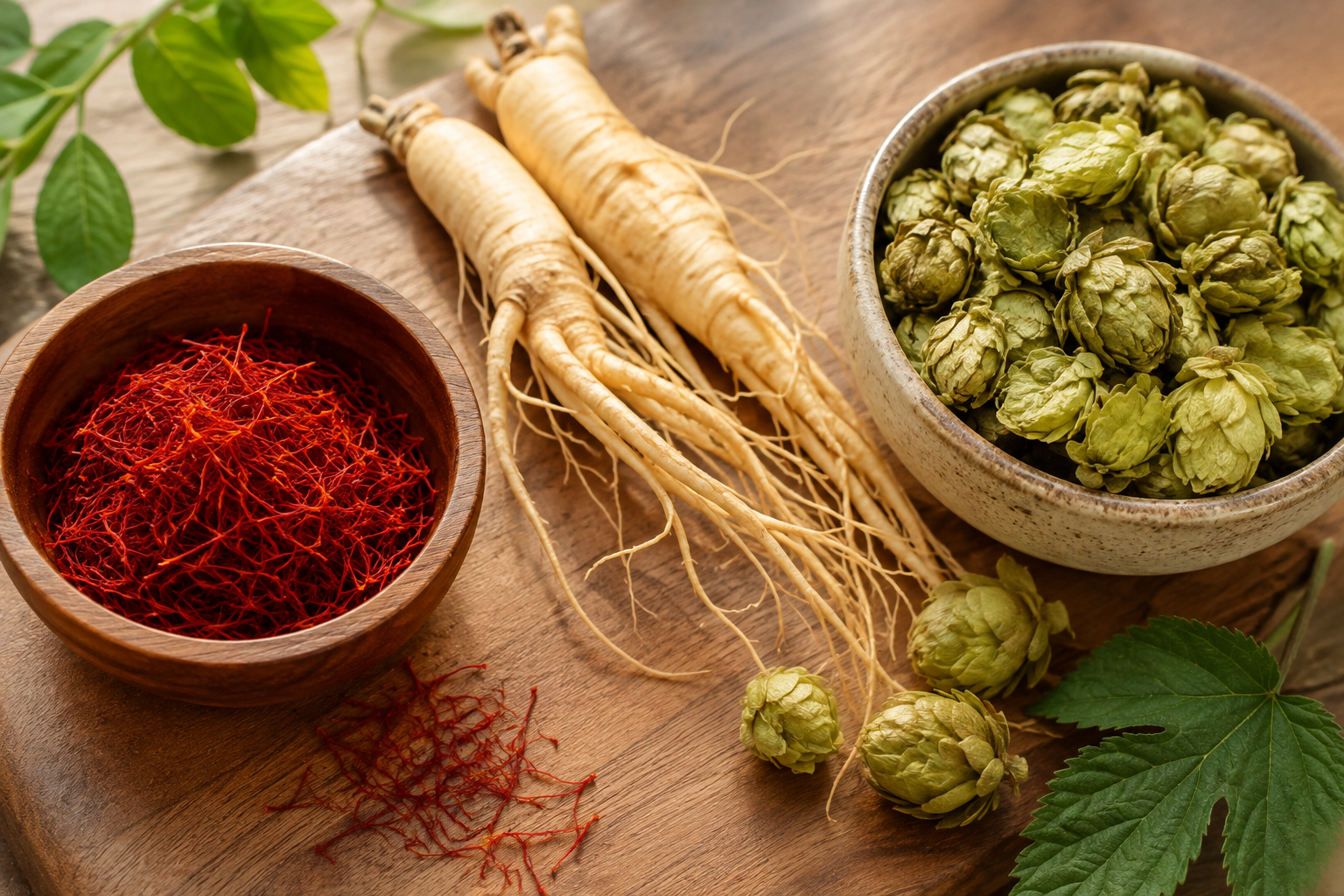
Saffron, the dried stigma of the Crocus sativus flower, has been studied specifically for its effects on appetite and satiety. A review of existing clinical evidence published in PMC identified appetite reduction as one of saffron's documented mechanisms, alongside effects on fat absorption through pancreatic lipase inhibition. A randomized, double-blind, placebo-controlled trial in patients with coronary artery disease found that an eight week course of saffron extract produced a pattern of improvement in appetite and body composition measures compared to placebo, as reported in research published via NCBI. A separate study in atherosclerosis patients similarly found clinically meaningful, though not statistically significant, changes in appetite and satiety scores after six weeks of saffron supplementation, according to the Journal of Research in Medical Sciences. Researchers note the effect appears dose-dependent, and call for larger trials to confirm the size of the benefit.
Panax Ginseng
Panax ginseng has a longer track record in blood sugar research than in appetite research specifically, but newer data connects the two. A study using network pharmacology analysis, published on PubMed, found that ginseng and its ginsenoside compounds appear to regulate the same appetite-related neuropeptides that drive hunger and fullness signals, by suppressing hunger-promoting neuropeptides and supporting the ones associated with satiety. Separately, a systematic review and meta-analysis of sixteen randomized controlled trials found that ginseng modestly but significantly reduced fasting blood glucose compared to control groups, based on research indexed on PMC. Since blood sugar swings are one of the most common triggers for cravings and hunger between meals, ingredients that support blood sugar levels already in a normal range are often included in natural appetite formulas for that reason.
What About Other Popular Ingredients?
Ingredients like hops (Humulus lupulus) extract are included in some natural formulas for their traditional use in supporting relaxation and metabolic wellness, though the appetite-specific research on hops is less developed than the research on saffron or ginseng. If a product includes an ingredient without strong human clinical data, that is worth knowing rather than assuming.
How Does GLP THREE Fit Into a Natural Approach to Appetite Support?
GLP THREE is a natural liquid dropper supplement formulated by Dr. Dan Gubler, a Caltech-trained PhD organic chemist, using a patented MBC-267 peptide complex derived from salmon in the Norwegian Sea and select mushrooms, combined with Panax Ginseng Extract, Saffron Extract, and Humulus Lupulus (Hops) Extract. It is designed to support the body's own GLP-1 pathway, appetite signaling, blood sugar levels already in a normal range, fat metabolism, and lean muscle maintenance as part of an active lifestyle.
It is important to be precise about what that means. GLP THREE is a supplement, not a prescription medication. It does not contain semaglutide or any synthetic hormone, and it is not a clinically supervised program with lab monitoring or physician-adjusted dosing built into the product. It requires no prescription and no injections, and it is taken by dropper.
A 4-bottle supply is $289 and includes a free consultation and a computerized Body Composition Analysis with Dr. Chris Colgin, DC, a licensed chiropractic physician who has practiced since 1996 and serves as Director of Optimal Health Members. That consultation is a starting point for understanding your own body composition, not a substitute for ongoing medical supervision.
What Should You Look for in a Natural Appetite Suppressant?
Before choosing any product in this category, it helps to know what separates a credible formula from marketing noise.
Named, dosed ingredients. Look for specific extracts (saffron, ginseng, and similar) rather than vague "proprietary blends" with no way to verify what you are actually taking.
Structure and function claims only. A compliant supplement should say it "supports" a healthy process, not that it "treats," "cures," or "reverses" a medical condition.
No implied drug equivalence. Be cautious of any product calling itself a "natural Ozempic" or claiming the "same results" as a prescription medication. That is not how supplements are allowed to be marketed, and it is rarely accurate.
Transparency about delivery method and dosing. A dropper or capsule is not an injection, and the two should never be described interchangeably.
A real formulator or credentialed team behind it, so you know who is accountable for what is in the bottle.
Frequently Asked Questions
Is a natural appetite suppressant as strong as Ozempic or Wegovy? No. Prescription GLP-1 medications introduce a synthetic hormone at a clinically controlled dose and are regulated as drugs, not supplements. Natural appetite suppressants support the body's own signaling using plant extracts and are a different category with a different mechanism and a milder effect.
How long does it take for a natural appetite suppressant to work? This varies by ingredient and individual. Clinical studies on ingredients like saffron have measured effects over six to eight weeks of consistent use, not overnight. Consistency matters more than any single dose.
Are natural appetite suppressants safe to take with other medications? Some plant extracts, including saffron and ginseng, can interact with certain medications or health conditions. Always talk to your doctor before starting any new supplement, especially if you take prescription medication or manage a chronic condition.
Does GLP THREE contain semaglutide? No. GLP THREE is a natural supplement formulated with a peptide complex and plant extracts. It does not contain semaglutide or any synthetic GLP-1 hormone, and it is not a prescription product.
What is the difference between an appetite suppressant and a fat burner? An appetite suppressant is intended to support satiety and hunger signaling, so you feel fuller with less food. A fat burner is typically formulated around metabolism or thermogenesis. Some products, including GLP THREE, are formulated to support multiple areas, including appetite signaling and fat metabolism, rather than just one.
These statements have not been evaluated by the Food and Drug Administration. This product is not intended to diagnose, treat, cure, or prevent any disease. Individual results may vary. Talk to your doctor before starting any new supplement.

If you are ready to explore a natural approach to appetite support, along with a free consultation and computerized Body Composition Analysis with Dr. Chris Colgin, you can learn more about GLP THREE here.