Non-Prescription Weight Loss: Your Real Options
If you've looked into Ozempic or Wegovy and stalled out at the price tag, the idea of a weekly injection, or the fact that your doctor won't prescribe it without a qualifying diagnosis, you're not alone. A lot of people start that search and end up asking a more basic question: what are my options if I want to support my weight and metabolism without a prescription at all?
Quick Answer:
Non-prescription weight loss refers to approaches that don't require a doctor's prescription, including diet and activity changes, behavior habits, and natural supplements formulated to support the body's own metabolic processes. These options work differently than prescription GLP-1 drugs like Ozempic or Wegovy, which use a synthetic hormone delivered by injection or pill. Non-prescription routes are generally lower cost and lower risk, but they are not a substitute for medical care or a guaranteed match for prescription-drug results.
Key Takeaways
Prescription GLP-1 medications like Ozempic and Wegovy list at roughly $1,000 to $1,349 a month without insurance, according to pricing data compiled by Noom's medically reviewed cost guide.
In the STEP 1 trial extension, people who stopped semaglutide regained a substantial share of the weight they had lost within a year of discontinuing treatment, according to research published in Diabetes, Obesity and Metabolism.
GLP-1 is a hormone your body already produces in the gut, where it plays a role in insulin secretion, digestion, and satiety signaling, as described in a 2025 review of incretin hormone physiology.
Non-prescription supplements that use natural ingredients work by a different mechanism than synthetic GLP-1 drugs and are regulated as dietary supplements, not prescription medications.
No non-prescription product, including GLP THREE, is designed to diagnose, treat, cure, or prevent any disease, and any weight or metabolism goal should be discussed with your doctor first.
What Does "Non-Prescription Weight Loss" Actually Mean?
Non-prescription weight loss is really a category, not a single method. It covers anything you can do to support a healthy weight without a doctor writing you a prescription. That includes the basics like nutrition and movement, but it also includes over-the-counter and dietary supplements you can buy directly, without a diagnosis, a prior authorization, or a pharmacy visit.
The contrast most people are actually drawing is with prescription GLP-1 receptor agonists such as semaglutide (Ozempic, Wegovy) and tirzepatide (Zepbound, Mounjaro). Those are FDA-approved drugs that require a prescriber's evaluation, a prescription, and ongoing physician oversight for dosing. Non-prescription options skip that entire process, for better and for worse: easier access, but also no built-in medical supervision, no lab monitoring, and no one adjusting your regimen based on bloodwork.
How Do Prescription GLP-1 Medications Work, and What Do They Cost?
Prescription GLP-1 drugs work by introducing a synthetic version of the GLP-1 hormone into the body at doses well above what your gut naturally produces. This slows digestion, increases feelings of fullness, and affects insulin signaling. The most commonly reported side effects are gastrointestinal, including nausea, vomiting, diarrhea, and constipation, especially early in treatment or after a dose increase, according to Mayo Clinic's overview of semaglutide's effects.
Cost is often the bigger barrier. Without insurance, Ozempic lists at around $1,000 a month and Wegovy lists at around $1,349 a month, based on manufacturer pricing tracked by Noom. Manufacturer savings programs and insurance coverage can bring that down significantly for some people, but plenty of others are paying close to list price, or being turned away from coverage entirely because their diagnosis doesn't meet an insurer's criteria.
What Happens When You Stop a Prescription GLP-1 Medication?
This is a question worth asking before comparing costs. In the STEP 1 trial extension, participants who took semaglutide for 68 weeks and then stopped regained a substantial portion of their lost weight within the following year, while cardiometabolic improvements seen during treatment also reverted toward baseline, according to the published trial data. The researchers noted that weight regain was steepest among participants who had lost the most weight during treatment.
This doesn't mean prescription GLP-1 drugs don't work while you're taking them. It means the effect appears to depend on continued use, which is part of why cost and access matter so much to anyone weighing a non-prescription alternative. If a non-prescription approach can't match the mechanism, it also isn't built to replicate that same withdrawal pattern, which cuts both ways: less dramatic short-term change, but no cliff to fall off if you stop.
What Is the Body's Natural GLP-1 Pathway?
GLP-1 isn't something your body is missing. It's a hormone your gut already secretes after you eat, and it plays a documented role in glucose-dependent insulin release, slowing gastric emptying, and signaling satiety to the brain, as outlined in a recent review of incretin hormone physiology. Prescription GLP-1 drugs work by flooding this same receptor system with a synthetic analog at pharmacological doses.
Non-prescription supplements built around this pathway take a different approach: instead of introducing a synthetic hormone, they use natural ingredients studied for their potential to support the body's existing GLP-1 signaling and appetite-related processes. That's a meaningfully different mechanism, and it's why structure and function language, not disease-treatment language, is the accurate way to describe what these products are formulated to do.
What Non-Prescription Options Exist for Supporting Metabolic Health?
Lifestyle Foundations Still Matter Most
No supplement, prescription or otherwise, replaces the basics: consistent movement, adequate protein and fiber intake, sleep, and stress management all influence appetite regulation and metabolic health. Any non-prescription approach works best layered on top of these habits, not instead of them.
Ingredients Researchers Are Studying for Metabolic Support
A handful of natural compounds have drawn research interest for their potential roles in appetite signaling and metabolism, though the evidence base is still developing and results vary by study and by extract:
Hops (Humulus lupulus) extract. Hop-derived compounds have been shown in published research to activate bitter taste receptors on gut enteroendocrine cells and stimulate release of GLP-1 and related gut peptides, with animal studies also showing reduced weight and improved glucose tolerance, according to a study published in Molecular Metabolism.
Panax Ginseng extract. Ginseng and its saponin compounds have been studied for their influence on appetite-regulating neuropeptides and lipid absorption, largely in preclinical and animal research, with researchers describing it as a potential avenue for further study in weight-related outcomes, per a review in the Journal of Ginseng Research.
Saffron (Crocus sativus) extract. A systematic review of randomized controlled trials found that certain saffron extracts reduced snacking frequency and increased reported satiety compared with placebo in mildly overweight adults, according to research published in Pharmacognosy Research. Results vary by the specific extract and dose studied.
GLP THREE's formulation includes a patented MBC-267 peptide complex, derived from salmon sourced in the Norwegian Sea and select mushrooms, alongside Panax Ginseng Extract, Saffron Extract, and Hops Extract. It's formulated by Dr. Dan Gubler, a Caltech-trained PhD organic chemist, to support the body's own GLP-1 pathway, appetite signaling, blood sugar levels already within a normal range, fat metabolism, and lean muscle maintenance as part of an active lifestyle. As with any dietary supplement, individual ingredient research doesn't guarantee a specific outcome from the finished product.
How Is a Natural Supplement Like GLP THREE Different From a Prescription Drug?
This is worth being precise about, because the differences aren't cosmetic:
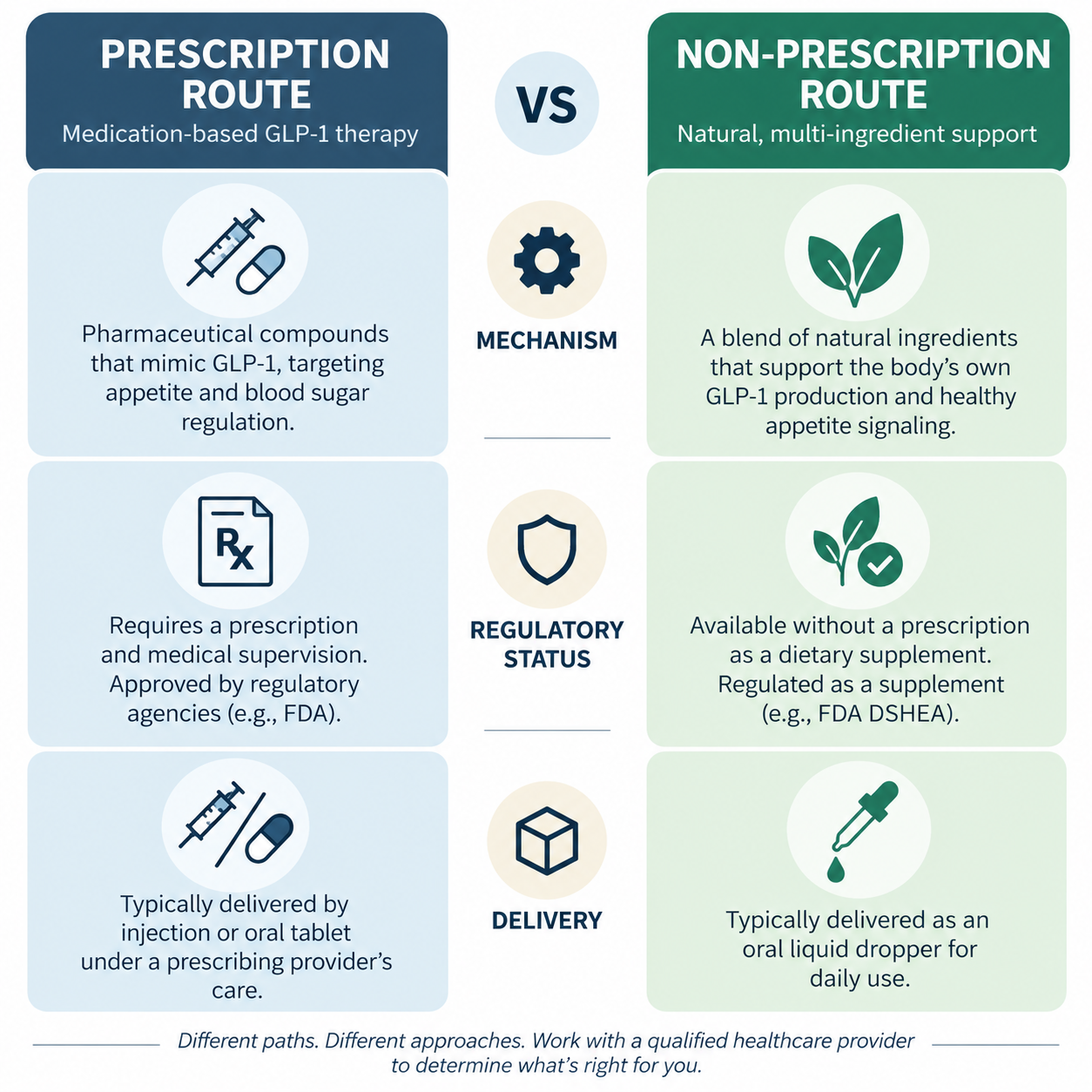
Mechanism. Prescription GLP-1 drugs introduce a synthetic hormone at pharmacological doses. GLP THREE uses natural ingredients formulated to support the body's own existing GLP-1 pathway and appetite signaling, not to replace or mimic a synthetic hormone.
Regulatory status. Ozempic and Wegovy are FDA-approved prescription drugs. GLP THREE is a dietary supplement. It is not FDA-approved, because dietary supplements aren't subject to that approval process, and it is not evaluated or marketed as equivalent to a prescription medication in effect or outcome.
Delivery method. Prescription GLP-1 medications are delivered by weekly injection or, in newer formulations, a daily pill. GLP THREE is taken as a liquid dropper, with no needles and no prescription required.
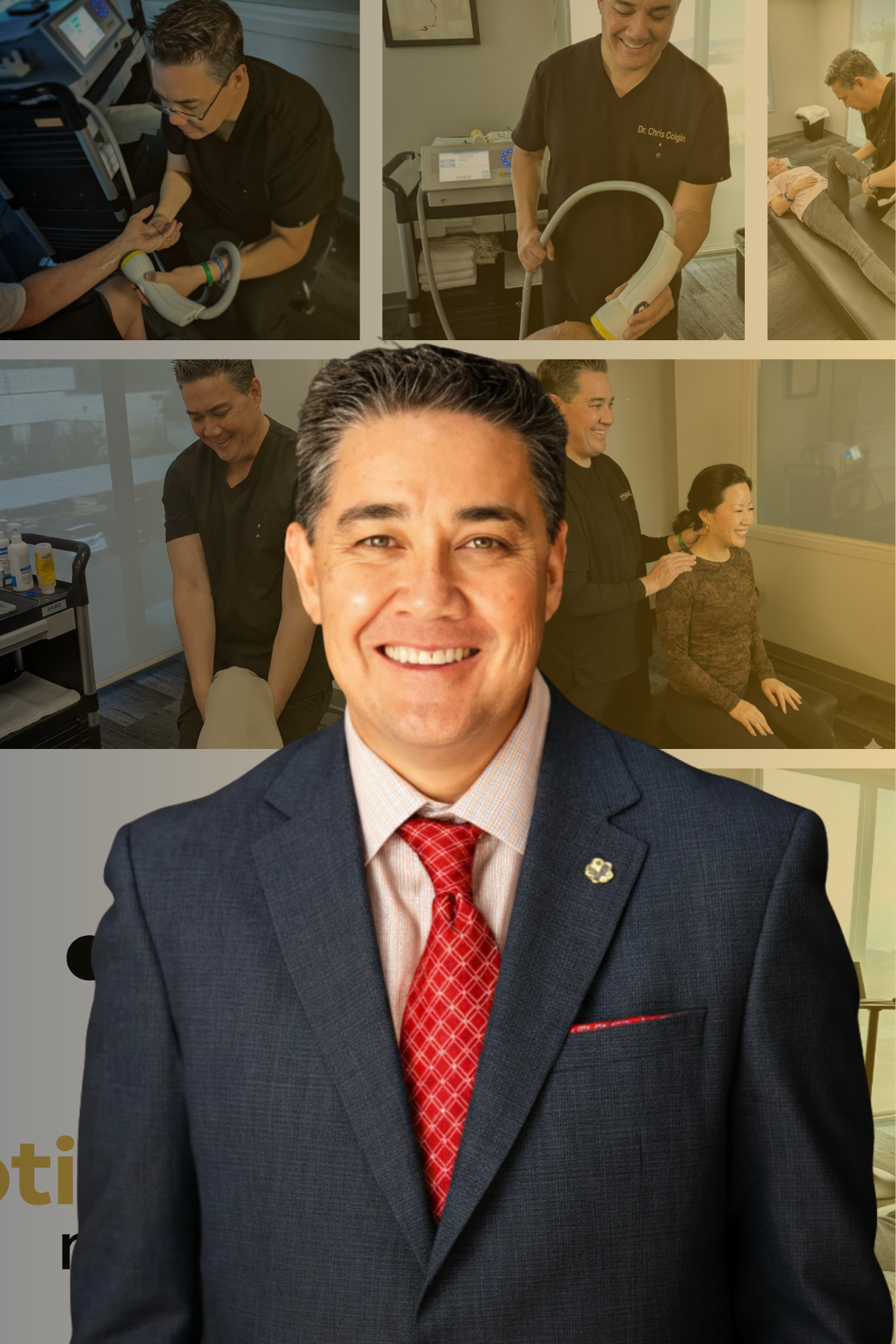
Oversight. Prescription GLP-1 treatment includes physician-adjusted dosing based on your response and, often, lab monitoring. GLP THREE does not include ongoing lab monitoring or physician-adjusted dosing as part of the product itself. A 4-bottle supply does include a complimentary consultation and a computerized Body Composition Analysis with Dr. Chris Colgin, DC, a licensed chiropractic physician who has practiced since 1996 and serves as Director of Optimal Health Members, but this is a one-time consultation offered with purchase, not a supervised clinical program.
GLP THREE does not contain semaglutide or any synthetic hormone, and it is not marketed or intended to produce the same clinical results as a prescription GLP-1 medication.
Who Might Consider a Non-Prescription Approach?
People land here for a lot of different, very real reasons. Some don't have insurance coverage for a weight-related prescription and can't absorb $1,000 or more a month out of pocket. Some don't meet the clinical criteria their insurer requires. Some simply don't want to inject anything, or would rather try something lower-commitment before pursuing a prescription route. Others are already on a prescription medication and are exploring what non-prescription support might look like if their situation changes.
None of these are wrong reasons to look into non-prescription options. What matters is going in with accurate expectations: a natural supplement working through a different mechanism than a synthetic hormone is not likely to produce the same magnitude of change, and it shouldn't be marketed as if it will.

What Should You Look for in a Non-Prescription Option?
If you're evaluating a non-prescription supplement, a few things separate a credible option from a gamble:
Transparent ingredients. You should be able to see exactly what's in the product and in what form, not a proprietary blend with no detail.
Named formulator credentials. Who actually formulated it, and what's their background?
Structure and function language, not disease claims. A compliant product describes what it's formulated to support, not conditions it treats or cures.
Realistic framing. Any product that claims to match or beat prescription GLP-1 drug results without a prescription, injections, or medical oversight should raise questions, not confidence.
A "talk to your doctor" posture, not a bypass-your-doctor posture. Especially if you take other medications or manage an existing condition.

Frequently Asked Questions
Can you actually lose weight without a prescription? Yes, weight and metabolic health can be influenced without a prescription through nutrition, activity, sleep, and natural supplements formulated to support existing metabolic processes. Results vary by individual and by approach, and non-prescription options generally work more gradually than prescription GLP-1 medications.
Is there a natural alternative to Ozempic? There is no natural product that duplicates a prescription drug. Natural supplements like GLP THREE use different ingredients and a different mechanism to support the body's own GLP-1 pathway, rather than introducing a synthetic hormone the way Ozempic does.
Does GLP THREE contain semaglutide or any synthetic hormone? No. GLP THREE is formulated with a natural MBC-267 peptide complex, Panax Ginseng Extract, Saffron Extract, and Hops Extract. It does not contain semaglutide or any synthetic hormone, and it is not a prescription medication.
How much does a non-prescription option like GLP THREE cost compared to prescription GLP-1 drugs? A 4-bottle supply of GLP THREE is $289 and includes a free consultation and Body Composition Analysis. Prescription GLP-1 drugs list at roughly $1,000 to $1,349 a month without insurance, according to current manufacturer pricing.
Is GLP THREE safe to take with other medications? Talk to your doctor before starting any new supplement, especially if you take prescription medications or manage an existing health condition. This applies to GLP THREE and to any dietary supplement.
These statements have not been evaluated by the Food and Drug Administration. This product is not intended to diagnose, treat, cure, or prevent any disease. Individual results may vary. Talk to your doctor before starting any new supplement.
If you're weighing a non-prescription route and want to understand your options in more detail, you can learn more about GLP THREE and its ingredients here, including the free consultation and Body Composition Analysis that come with a 4-bottle supply.