PCOS and Insulin Resistance: The Real Connection Explained
If you have PCOS and you've ever been told to "just lose weight" as though that were a simple instruction, you already know it isn't. Polycystic ovary syndrome is one of the most common hormonal conditions in reproductive-age women, and for a large share of women who have it, insulin resistance sits underneath most of the frustrating parts: the stubborn weight, the sugar cravings, the irregular cycles, the sense that your body isn't responding the way it "should."
This article looks at what the research actually says about the PCOS-insulin resistance connection, why it matters beyond the scale, and what evidence-based approaches exist. It is educational only. If you have PCOS or suspect you might, the right next step is always a conversation with your doctor, who can order the right testing and build a plan around your specific case.
Quick Answer:
Insulin resistance is present in roughly 50 to 70 percent of women with PCOS, independent of body weight, and it drives many of the condition's hallmark symptoms, including weight gain, sugar cravings, and irregular cycles. It isn't something you can self-diagnose from symptoms alone. It requires blood testing your doctor can order, and it's typically managed through a combination of nutrition, movement, sleep, and, when appropriate, medication.
Key Takeaways
Insulin resistance affects an estimated 50 to 70 percent of women with PCOS, and it's present even in those who aren't classified as overweight.
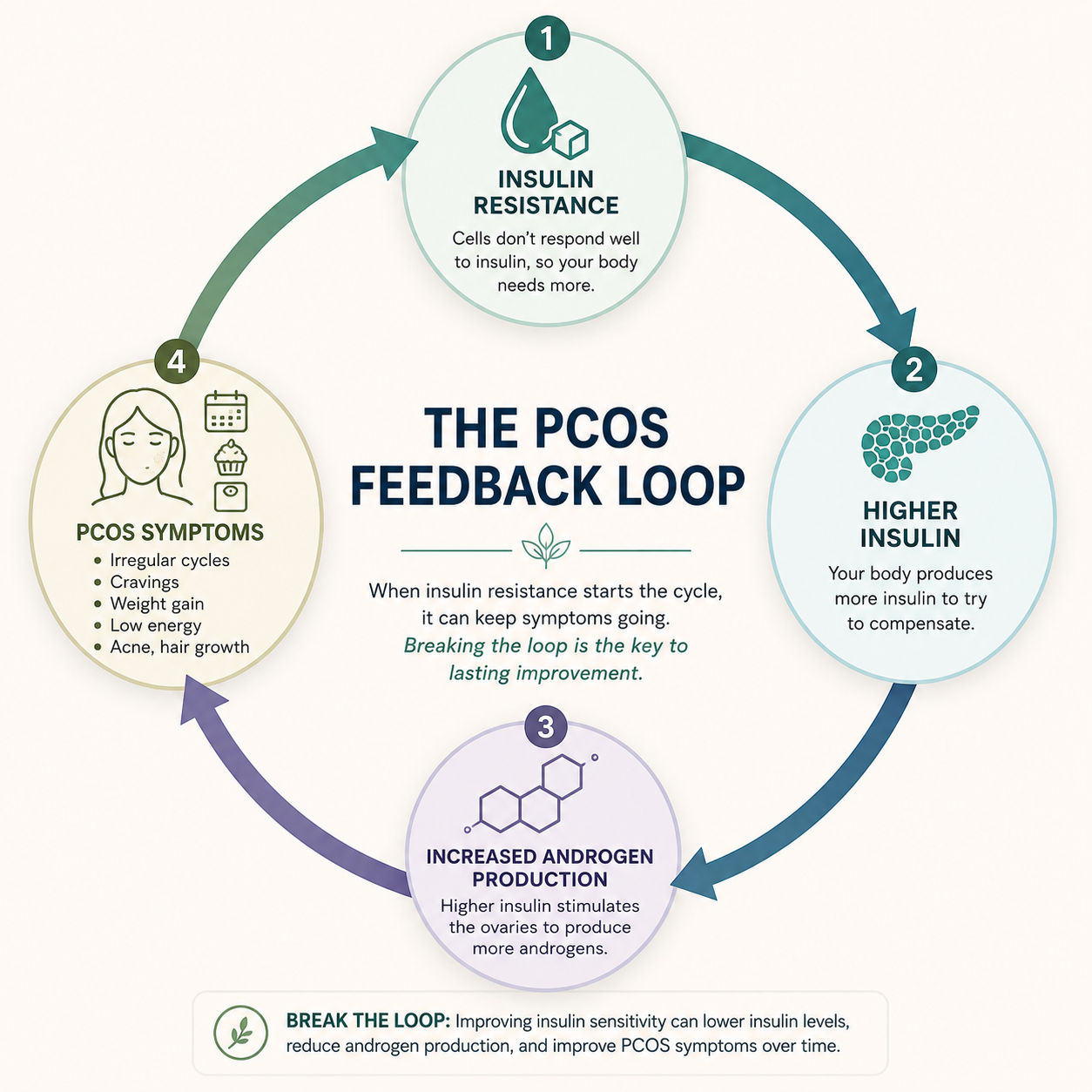
Insulin resistance and PCOS reinforce each other: higher insulin levels can worsen the hormonal imbalances that define PCOS, and those hormonal imbalances can worsen insulin sensitivity.
A body weight reduction of just 5 to 10 percent has been associated with meaningful improvements in insulin sensitivity, cycle regularity, and ovulation for women carrying excess weight.
Lifestyle intervention (nutrition, exercise, sleep, stress management) is considered a first-line approach in PCOS guidelines, though adherence over the long term is a genuine challenge, not a personal failing.
Diagnosis requires lab testing. There's no symptom checklist that substitutes for bloodwork your doctor orders and interprets.
What Is the Actual Link Between PCOS and Insulin Resistance?
PCOS is diagnosed using a combination of irregular ovulation, elevated androgen hormones, and/or polycystic ovarian morphology on ultrasound. Insulin resistance isn't part of the official diagnostic criteria, but researchers increasingly treat it as central to understanding the condition rather than a side effect of it.
Insulin resistance means your cells don't respond to insulin as efficiently as they should, so your pancreas compensates by producing more of it. That excess insulin, called hyperinsulinemia, does more than affect blood sugar. It can stimulate the ovaries to produce more androgens (male-pattern hormones like testosterone), which is part of what drives symptoms like irregular periods, acne, and excess hair growth in PCOS. a cross-sectional study of PCOS patients found a significant correlation between insulin levels and free androgen index even after adjusting for BMI, which is part of why researchers describe the relationship as a "vicious circle" rather than a one-way street.
Estimates of how common insulin resistance is among women with PCOS vary by study population and testing method, but a review in Fertility and Sterility put the figure at roughly 50 to 70 percent of women with PCOS, and more recent work using clamp-based testing, considered the gold standard, found insulin resistance documented in 75 percent of women with PCOS. Insulin resistance in PCOS is also independent of obesity or body mass index, meaning women at a normal weight can have it too.
Why Does Insulin Resistance Make Weight Loss Harder With PCOS?
PCOS can make weight loss more difficult because insulin resistance affects how the body responds to the hormone that regulates blood sugar, which can lead to higher insulin levels, increased hunger, and greater fat storage. That's a physiological explanation, not an excuse, and it matters because it reframes a common source of shame. If diet and exercise haven't "worked" the way they seem to for other people, insulin resistance is often part of the reason why, not a sign that you aren't trying hard enough.
Research has also pointed to additional biological hurdles specific to PCOS. Some studies suggest women with the condition may face reduced utilization of fat stores and decreased brown adipose tissue activity, both of which can make fat loss slower even with consistent effort. Long-term adherence to lifestyle changes is also a documented challenge across the research, not a personal one. Studies on adolescents with PCOS have found only around 60 percent stick with nutritional interventions over time, and attrition in longer clinical trials is common. This is a hard condition to manage consistently, and the data backs that up.

What Do the Guidelines Actually Recommend?
diet, exercise, and behavioral management are recommended as first-line management for any presentation of PCOS in women carrying excess weight, according to the International Evidence-based Guideline for the Assessment and Management of Polycystic Ovary Syndrome. This isn't a vague "eat better" recommendation. It reflects real outcome data.
On weight and insulin sensitivity: even a 5 to 10 percent reduction in body weight has been associated with improved insulin sensitivity, menstrual regularity, and ovulation for those carrying excess weight, though benefits vary and PCOS care shouldn't focus on weight in isolation.
On exercise specifically: a combination of strength training, to build metabolically active muscle, and aerobic activity for cardiovascular health and fat loss tends to deliver the best results, and regular movement has ripple effects on sleep and mood that also influence PCOS symptoms indirectly.
On medical options: For some patients, medication has a role alongside lifestyle change. metformin is a longstanding option that decreases glucose production by the liver and improves glucose uptake in muscle, liver, and fat tissue, and current guidance recommends it for PCOS patients with a BMI of 25 or higher in addition to lifestyle changes. More recently, researchers have also studied prescription GLP-1 receptor agonists, medications like semaglutide (marketed as Wegovy or Ozempic) and liraglutide (marketed as Saxenda), for adults with PCOS who meet general prescribing criteria for chronic weight management. These are prescription drugs that require a doctor's evaluation, and whether one is appropriate depends entirely on individual health history.
Does PCOS Ever Resolve, or Is This Lifelong Management?
There's no cure for PCOS, and that's an important thing to say plainly rather than dance around. What changes over time, often significantly, is how manageable the symptoms are. Many women see meaningful improvement in cycle regularity, energy, and metabolic markers once insulin resistance is identified and addressed, whether through lifestyle change, medication, or both. Managing PCOS well tends to be an ongoing process rather than a one-time fix, which is part of why consistency matters more than intensity.
FAQ
How do I know if I have insulin resistance with PCOS? You can't reliably tell from symptoms alone. Your doctor can order fasting glucose and insulin levels, sometimes calculating a HOMA-IR score, or in some cases order an oral glucose tolerance test. This bloodwork is the only way to confirm it.
Can you have PCOS without insulin resistance? Yes. one study of Thai women with PCOS found an overall insulin resistance prevalence of 20 percent, well below the commonly cited 50 to 70 percent range, showing that prevalence varies by population and testing method, and not every woman with PCOS is insulin resistant.
Does losing weight fix PCOS? No single intervention "fixes" PCOS, but for women carrying excess weight, modest weight loss has been linked to improved insulin sensitivity and more regular cycles. Weight is one factor among several, not the whole picture, and women at a normal weight can have significant insulin resistance too.
Is metformin the only medication used for PCOS-related insulin resistance? No. Metformin is the most established option, but your doctor may discuss other approaches depending on your labs, weight, and goals, including prescription GLP-1 medications in appropriate cases. This is a decision that requires a full medical evaluation, not something to self-select.
What's the difference between PCOS symptoms and insulin resistance symptoms? They overlap heavily, which is part of why the two are so linked. Irregular cycles and excess androgen symptoms (acne, hair growth) point toward PCOS specifically, while fatigue after meals, sugar cravings, and stubborn midsection weight point toward insulin resistance. Many women experience both at once.
A Note on Where GLP THREE Fits
GLP THREE is not a treatment for PCOS and isn't positioned as one. It's a natural liquid dropper supplement formulated with a patented MBC-267 peptide complex alongside Panax Ginseng, Saffron, and Hops extracts, designed to support the body's own GLP-1 pathway, appetite signaling, and healthy blood sugar levels already in a normal range, as part of an active lifestyle. It requires no prescription and no injections.
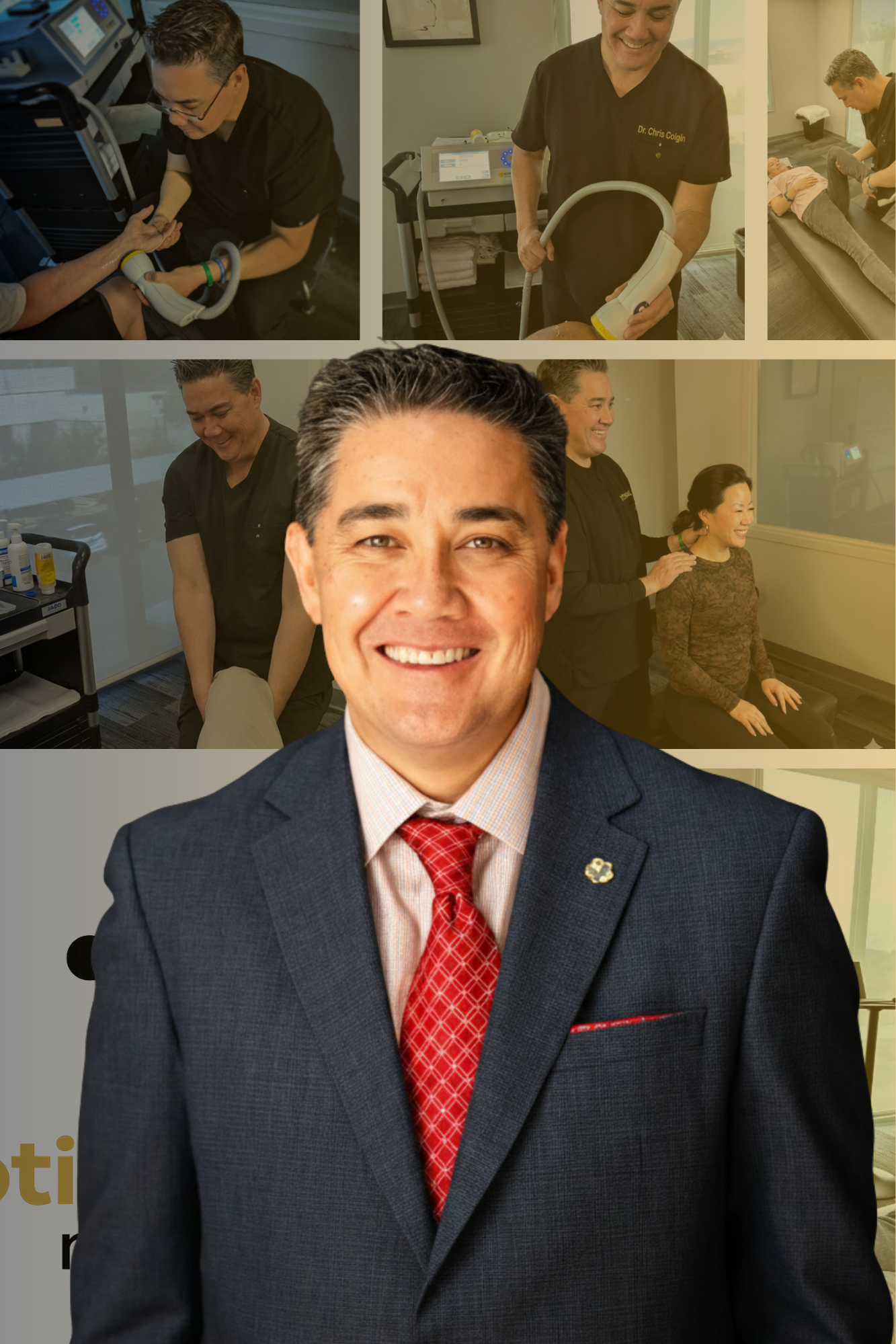
If you're managing PCOS-related insulin resistance, the conversation about what belongs in your plan, whether that's lifestyle change alone, a prescription medication, a supplement, or some combination, needs to happen with your doctor first. Dr. Chris Colgin, DC, a licensed chiropractic physician practicing since 1996, offers a free consultation and computerized Body Composition Analysis for those exploring their options, which can be a useful starting point alongside, not instead of, your own physician's evaluation.
These statements have not been evaluated by the Food and Drug Administration. This product is not intended to diagnose, treat, cure, or prevent any disease. Individual results may vary. Talk to your doctor before starting any new supplement.

Learn More
If you'd like to explore whether GLP THREE fits into your broader plan, you can view product details and order here. The free consultation and Body Composition Analysis with Dr. Colgin are included with purchase.