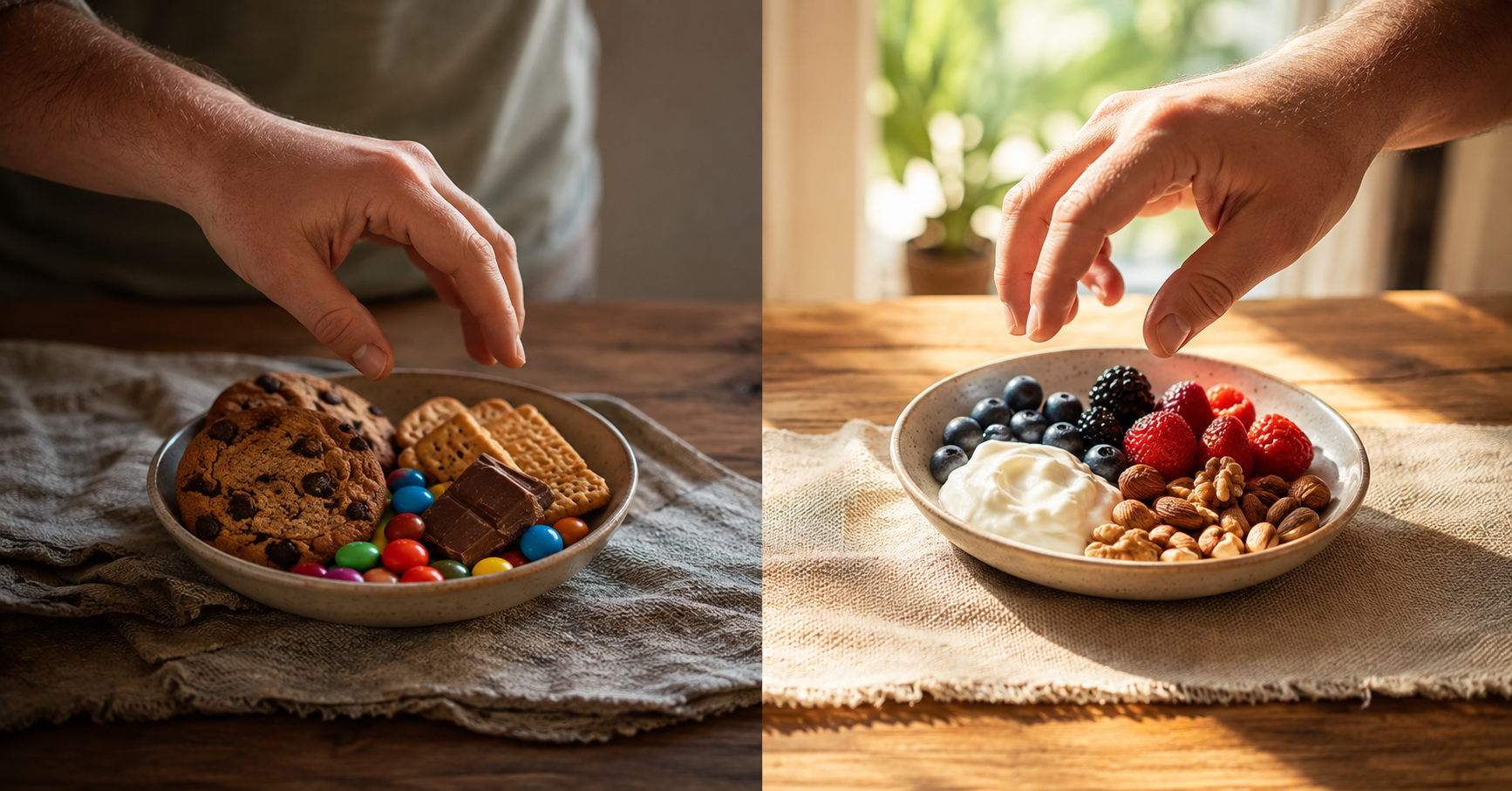
Sugar Cravings: Causes and Natural Remedies That Work
It is 3pm, you are three hours from dinner, and every part of your brain is negotiating for something sweet. You already know the lecture: eat less sugar, have more willpower. But if this happens most afternoons, willpower was never really the problem. Sugar cravings are usually your body sending a specific, physiological signal, and once you know what that signal is, you can respond to it instead of fighting it.
Quick Answer: Sugar cravings are most often driven by blood sugar swings, hunger hormones like ghrelin, poor sleep, and stress, not a lack of discipline. The most effective natural remedies are pairing carbohydrates with protein and fiber, eating on a consistent schedule, prioritizing sleep, and managing stress, since these directly address the biological triggers behind the craving instead of only suppressing it.
Key Takeaways
Sugar cravings are frequently triggered by rapid blood sugar spikes and crashes from refined carbohydrates, not simply a "sweet tooth."
Skipping meals signals the body to seek fast energy sources, which is one reason cravings intensify later in the day.
Protein and fiber slow digestion and help stabilize blood sugar, which is one of the most evidence-backed ways to reduce craving intensity.
Poor sleep is associated with lower leptin and higher ghrelin, the hormones that regulate fullness and hunger, which can make cravings harder to manage.
Chronic, unmanaged cravings paired with fatigue or weight changes are worth discussing with a healthcare provider, since they can sometimes point to a broader blood sugar pattern.
What Causes Sugar Cravings in the First Place?
Sugar cravings are rarely random. They tend to follow a predictable chain of events inside the body.
Blood Sugar Spikes and Crashes
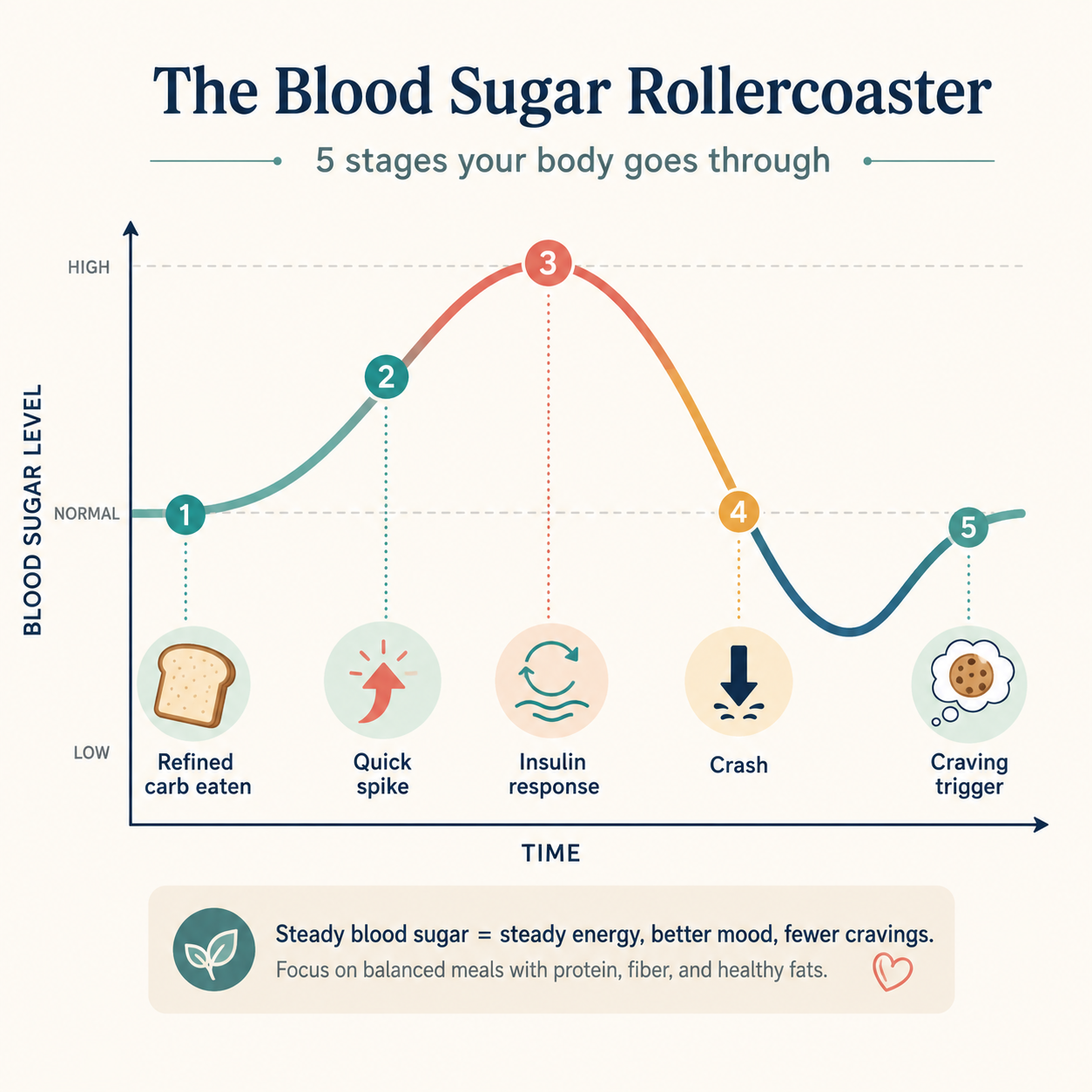
When you eat something high in refined carbohydrates, glucose enters the bloodstream quickly. The pancreas responds by releasing insulin to move that glucose into cells for energy. This rapid rise is often followed by an equally rapid drop, and that decline is what tends to trigger the next wave of hunger and craving, sometimes within a few hours of eating.
One Harvard Medical School study led by Dr. David Ludwig found that high-carbohydrate meals left participants hungrier four hours later than meals built around more protein and fiber. The takeaway is not that carbohydrates are the enemy. It is that the composition of a meal, not just its size, shapes how soon the next craving shows up.
Hunger Hormones Are Working Against You
Two hormones do most of the heavy lifting here. Ghrelin, produced mainly in the stomach, signals hunger to the brain. Leptin, produced by fat cells, signals fullness. Research suggests that adequate protein intake can help lower ghrelin levels, which is part of why a protein-forward breakfast tends to blunt cravings later in the day.
Sleep and Stress Change the Chemistry
Poor sleep has been linked to lower leptin and higher ghrelin, a combination that primes the body to want more food, especially quick sources of energy like sugar. Stress adds another layer. Elevated stress hormones can raise ghrelin and lower serotonin, and that combination has been described as a "double whammy" that intensifies sugar cravings specifically.
Skipped Meals and Restriction
Going too long without eating does not build discipline. It builds urgency. When blood sugar drops from skipping meals, the body signals for the fastest available energy source, which is almost always something sweet. Overly restrictive diets can backfire the same way, making the restricted food more mentally consuming, not less.
Are Sugar Cravings a Sign of a Deeper Blood Sugar Pattern?
Occasional cravings are normal. But when cravings are frequent, intense, and paired with fatigue, irritability, or difficulty concentrating between meals, it may be worth paying closer attention to the pattern rather than just the craving itself.
One study on people with diabetes found that those who craved sugar and white bread most also tended to have the highest A1c levels, a marker of average blood sugar over time. The researchers were careful to note that this does not prove cravings cause blood sugar problems, only that the two tend to move together. That distinction matters. Cravings are a signal worth listening to, not a diagnosis on their own.
If sugar cravings are new, severe, or accompanied by unexplained weight changes, excessive thirst, or fatigue, that combination is worth bringing to a doctor rather than managing with diet changes alone.
What Are the Most Effective Natural Remedies for Sugar Cravings?
The research points to a handful of strategies that consistently outperform sheer willpower, because they address the actual mechanism behind the craving.
Pair Carbohydrates With Protein and Fiber
This is the single most supported strategy in the research. Protein slows digestion, increases satiety, and reduces the rate at which cells absorb sugar, which helps prevent the spike-and-crash cycle that drives the next craving. Fiber works alongside it by slowing gastric emptying, which delays and softens the blood sugar spike from a carbohydrate-containing meal.
In practice, this means adding a source of protein or fiber to the foods you already eat, rather than eliminating carbohydrates altogether.
Eat on a Consistent Schedule
Going long stretches without eating sets up exactly the blood sugar drop that triggers cravings. Spacing protein intake across the day, rather than saving it all for dinner, is one practical way to keep hunger hormones more stable.
Protect Your Sleep
Sleep is not a lifestyle nicety here, it is a hormonal lever. Since poor sleep is tied to lower leptin and higher ghrelin, consistent, sufficient sleep is one of the more overlooked tools for reducing next-day cravings.
Build in Stress Management
Because stress hormones can drive ghrelin up and serotonin down at the same time, something as simple as a short walk, breathing exercise, or a consistent wind-down routine can interrupt the stress-craving cycle before it reaches the kitchen.
Move After Meals
A brief 10 to 20 minute walk after eating has been shown to help blunt post-meal blood sugar spikes, which may reduce the intensity of cravings that follow a few hours later.
Stay Hydrated
Thirst is frequently misread by the body as hunger. Drinking water before reaching for a snack is a low-effort first step that costs nothing to try.
Can Natural Ingredients Support the Body's Own Appetite and Blood Sugar Signaling?
Diet, sleep, and stress management are the foundation, but some people look for additional support from natural ingredients that work with the body's existing systems rather than against them.
This is the space GLP THREE was formulated for. It is a liquid dropper supplement containing a patented MBC-267 peptide complex, derived from salmon in the Norwegian Sea and select mushrooms, along with Panax Ginseng Extract, Saffron Extract, and Humulus Lupulus (Hops) Extract. It is formulated to support the body's own GLP-1 pathway, appetite signaling, blood sugar levels already in a normal range, fat metabolism, and lean muscle maintenance as part of an active lifestyle.
It is important to be direct about what this is and is not. GLP THREE is a natural supplement, not a prescription medication, and it requires no injections, just a dropper. It does not include ongoing lab monitoring, physician-adjusted dosing, or bloodwork-based tracking as part of the product itself. A 4-bottle supply is $289 and includes a free consultation and a computerized Body Composition Analysis with Dr. Chris Colgin, DC, a licensed chiropractic physician practicing since 1996 and Director of Optimal Health Members. The formulation itself was developed by Dr. Dan Gubler, a Caltech-trained PhD organic chemist.
Nothing here replaces the foundational habits above. It is meant to work alongside them, not instead of them.
Frequently Asked Questions
What is the fastest way to stop a sugar craving in the moment? Drink a glass of water first, since thirst is often mistaken for hunger. If the craving persists after 10 to 15 minutes, reach for a small portion of protein or fiber, like nuts or fruit, rather than refined sugar, to help stabilize blood sugar without a crash later.
Are sugar cravings a sign of low blood sugar? They can be. A rapid blood sugar drop after a refined-carbohydrate meal is one of the most common craving triggers. Consistent meals with protein and fiber help prevent the swing that leads to the craving in the first place.
Do sugar cravings mean I have insulin resistance? Not necessarily. Research shows cravings and blood sugar markers can move together, but cravings alone are not a diagnosis. Frequent, intense cravings paired with fatigue or unexplained weight changes are worth discussing with a doctor.
Can natural supplements actually help with sugar cravings? Some natural ingredients are formulated to support the body's own appetite and blood sugar signaling as part of a broader lifestyle approach. They work alongside habits like balanced meals and sleep, not as a replacement for them.
How long does it typically take to notice fewer sugar cravings? Many people notice a difference within one to two weeks of consistently pairing carbohydrates with protein and fiber and stabilizing meal timing, though individual results vary based on sleep, stress, and overall diet.
Where to Go From Here
Sugar cravings respond best to consistency, not restriction. Balanced meals, steady sleep, and lower stress do most of the work. For those who want additional support for the body's own appetite and blood sugar signaling, GLP THREE was formulated with that goal in mind, and every order includes a free consultation and Body Composition Analysis with Dr. Chris Colgin to talk through what that could look like for you.
These statements have not been evaluated by the Food and Drug Administration. This product is not intended to diagnose, treat, cure, or prevent any disease. Individual results may vary. Talk to your doctor before starting any new supplement.