Type 2 Diabetes Natural Solutions: What Actually Works?
What the research supports, where supplements fit, and the honest line between the two.
You searched for natural solutions for type 2 diabetes, and that tells me something. Maybe you just left an appointment with a new diagnosis, a prescription, and a handout you haven't read yet. Maybe you've been on medication for years and you're wondering whether you're doing everything you can. Either way, the internet is about to try to sell you a lot of bottles. So let me give you the answer I'd give you if you were sitting across my desk.
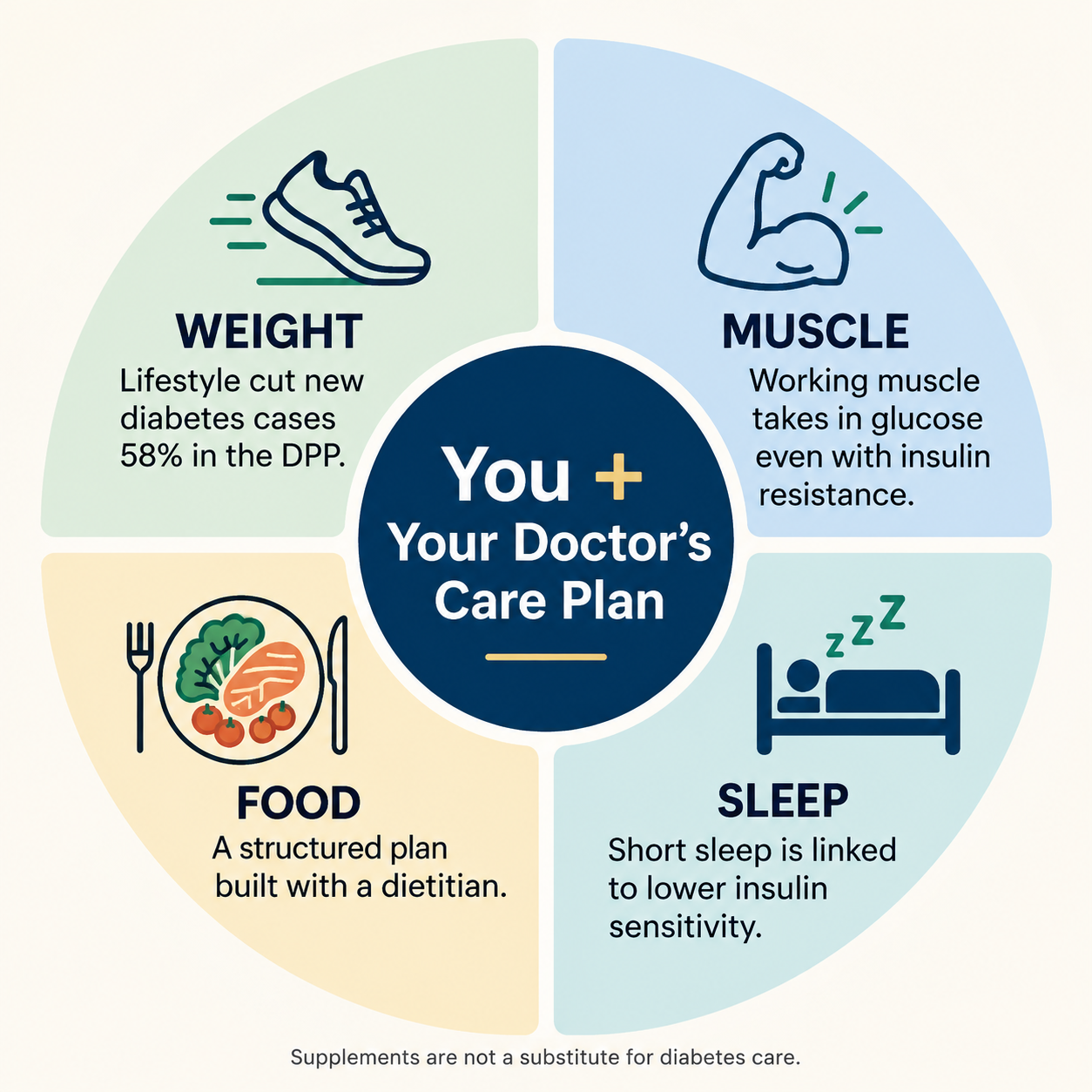
There are real natural solutions for type 2 diabetes. Almost none of them come in a bottle, including the one I put my name on. The strongest evidence points to four things you do, not four things you buy: lose excess weight, use your muscles, change how you eat, and protect your sleep. All of it works best alongside the doctor who manages your diabetes, not around them.
Quick Answer: The most effective natural solutions for type 2 diabetes are lifestyle changes made with your doctor: weight loss, aerobic and strength exercise, a structured eating plan, and enough sleep. Intensive weight management has led to remission for some people in clinical trials. According to the NIH, no dietary supplement has been shown to manage or prevent type 2 diabetes.
Key Takeaways
In the Diabetes Prevention Program, a lifestyle program aimed at 7% weight loss and 150 minutes of weekly activity cut new cases of type 2 diabetes by 58% in high-risk adults, compared with 31% for the drug metformin.
In the DiRECT trial, 46% of people in an intensive weight management program were in diabetes remission at 12 months, compared with 4% in usual care.
Working muscles pull glucose from the blood through a pathway that insulin resistance doesn't impair, which is why strength training belongs in any natural plan.
The NIH's National Center for Complementary and Integrative Health reports there isn't enough evidence that any dietary supplement can help manage or prevent type 2 diabetes.
GLP THREE is a natural supplement. It is not a diabetes treatment and not a substitute for any medication.
What Does "Natural" Really Mean When You Have Type 2 Diabetes?
Type 2 diabetes isn't a willpower problem. It develops when your cells stop responding well to insulin and your pancreas can't release enough extra insulin to make up the difference. The joint position statement from the American College of Sports Medicine and the American Diabetes Association describes the disease as exactly that combination: insulin resistance plus inadequate compensation. Most of the natural tools work on the first half of that problem. They help your body respond better to the insulin it already makes.
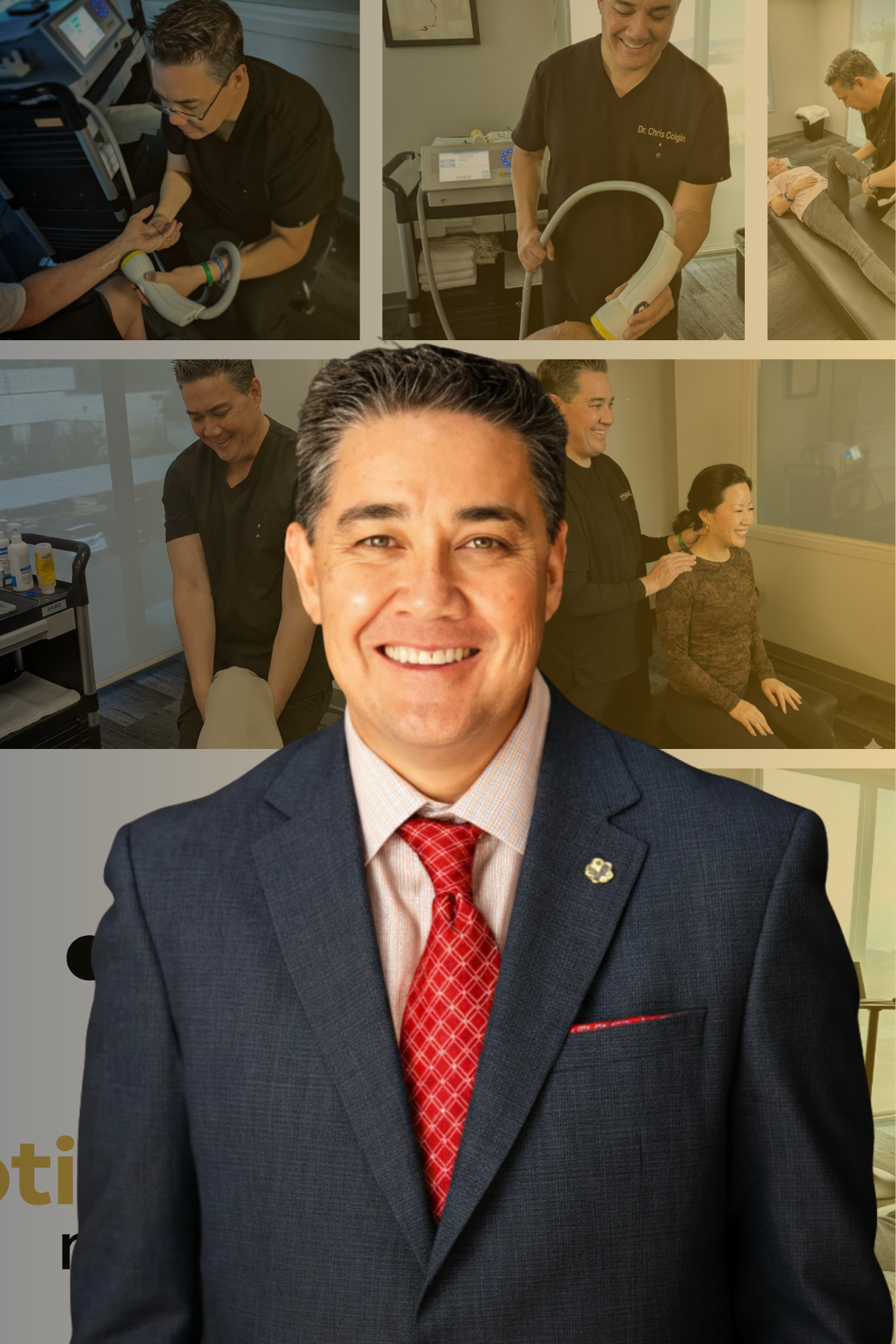
When I say "natural," I don't mean "instead of your medication." I've practiced as a chiropractic physician since 1996, and I've been helping patients with weight management since 2012. I don't prescribe diabetes medication and I don't adjust it. I never want someone to change a dose because of something they read on a website, including this one. That decision belongs to the physician who prescribed it.
There's a practical reason for that, too. If you take insulin or certain other diabetes medications, eating less and moving more can push your blood sugar too low. Low blood glucose is a real risk when lifestyle changes and medication stack on top of each other, which is exactly why your prescriber needs to know what you're changing before you change it.
What Does the Research Say About Lifestyle and Type 2 Diabetes?
If you only remember two studies from this post, make it these two.
Can weight loss put type 2 diabetes into remission?
The DiRECT trial, published in The Lancet in 2018, ran in 49 primary care practices in Scotland and northern England. It enrolled adults ages 20 to 65 who had been diagnosed with type 2 diabetes within the previous six years, carried excess weight, and weren't using insulin. Half the practices offered an intensive weight management program. The other half provided best-practice usual care.
At 12 months, 46% of people in the weight management group were in remission, compared with 4% in the usual-care group. Remission had a strict definition: an A1C below 6.5% after at least two months off all diabetes medication.
Two details matter as much as the headline number. First, participants didn't stop their medication on their own; the changes happened inside a program run by their primary care practices. Second, remission tracked closely with how much weight people lost, and none of the participants who gained weight reached it. Remission isn't the finish line. It's a state you keep by keeping the weight off.
Can lifestyle changes prevent type 2 diabetes?
The Diabetes Prevention Program, published in the New England Journal of Medicine in 2002, followed 3,234 adults whose blood sugar was elevated but not yet in the diabetes range. One group got metformin. Another got a lifestyle program with two goals: lose at least 7% of body weight and get at least 150 minutes of physical activity a week.
The lifestyle group reduced new cases of type 2 diabetes by 58% compared with placebo. Metformin reduced them by 31%. The habits outperformed the pill. If you've been told you have prediabetes, that's the most encouraging number in this post.
Why Does Muscle Matter So Much for Blood Sugar?
Here's the piece of physiology I wish every patient knew. At rest, your muscles pull glucose out of your blood mostly in response to insulin, and in type 2 diabetes that pathway is impaired. But when a muscle contracts, it pulls in glucose through a separate pathway that insulin resistance doesn't block. Every set of squats and every flight of stairs opens a door that diabetes hasn't locked.
That's why the ADA and ACSM recommend moderate to vigorous resistance training at least two to three days a week, in addition to aerobic activity, for people with type 2 diabetes. The 2022 ACSM consensus statement adds something that sounds small and isn't: break up long stretches of sitting with frequent activity breaks.
It's also why I care more about what you're losing than how much. One study cited in that 2022 consensus found that older adults with type 2 diabetes who combined modest weight loss with resistance training gained lean muscle and saw roughly three times the A1C improvement of a group that cut calories without exercising and lost muscle. Weight that comes off as muscle takes some of your glucose-handling capacity with it.
A bathroom scale can't tell you which kind of weight you lost. A body composition analysis separates fat mass from lean mass, which is why I use one.
What Should You Eat When You Have Type 2 Diabetes?
There's no single diabetes diet, and I'd be suspicious of anyone selling you one. The NIDDK's guidance is to build a healthy eating plan with a professional such as a registered dietitian, one that fits your medications, your schedule, and the food you actually like to eat. Meal timing matters more with some diabetes medications than others, which is one more reason to plan this with your care team instead of copying a plan from social media.
If I could change one thing first, it would usually be what's in your glass, because it's often the simplest place to start. After that, build your plate around vegetables, protein, and fiber-rich foods, and let refined carbohydrates become the smaller part of the plate instead of the center of it.
Protein matters here for a second reason: muscle. If you're losing weight, eating enough protein and training your muscles is how you hold on to the lean mass we just talked about.
Does Sleep Affect Blood Sugar?
Sleep is the pillar people skip because it doesn't feel like doing anything. It is doing something. A CDC-published review concludes that chronic lack of sleep may contribute to the risk of type 2 diabetes, connects sleep loss with reduced insulin sensitivity, and recommends that adequate sleep be emphasized for people with diabetes.
Start with a consistent bedtime and wake time, even on weekends. And if you snore loudly, wake up gasping, or feel exhausted after a full night in bed, ask your doctor whether you should be evaluated for sleep apnea. That's a medical question, and it deserves a medical answer.
Can Supplements Help Manage Type 2 Diabetes?
I'll be straight with you, because you'll see the opposite claim everywhere. The NIH's National Center for Complementary and Integrative Health states that there isn't enough scientific evidence to show that any dietary supplement can help manage or prevent type 2 diabetes. Cinnamon studies conflict. Chromium can cause side effects. And there are case reports linking some supplements to kidney disease, which matters more than usual here, because diabetes is the leading cause of chronic kidney disease and kidney failure in the United States.
NCCIH also warns that some supplements can interact with diabetes treatment, and that some are marketed illegally and become harmful when people use them in place of effective care. That last part is the one that worries me most.
That list of herbs studied for diabetes without reliable evidence includes ginseng, which is one of the ingredients in GLP THREE. I'm telling you that because it's true, and because it's exactly why I don't present GLP THREE as a diabetes product.
How Is GLP THREE Different From Ozempic?
GLP-1 is a hormone your own gut makes. Cells in your intestine release it after you eat, and it helps stimulate insulin, hold back glucagon, and slow how fast your stomach empties. Your body also breaks it down very quickly, within minutes.
Ozempic contains semaglutide, a synthetic, long-acting GLP-1 receptor agonist. It's a prescription drug that the FDA has approved for adults with type 2 diabetes, most familiar as a once-weekly injection and used alongside diet and exercise.
GLP THREE is something else entirely, and the differences are worth stating plainly:
Mechanism. GLP THREE uses natural ingredients formulated to support your body's own GLP-1 pathway. It contains no semaglutide and no synthetic hormones.
Regulatory status. GLP THREE is a dietary supplement. It is not an FDA-approved drug, and it has not been evaluated as a treatment for diabetes or any other disease.
Delivery. GLP THREE is a liquid taken by dropper. No prescription, no injections.
It does not produce the effects of a prescription GLP-1 medication, and it isn't a replacement for one. If you're taking Ozempic or any diabetes medication, please don't stop or swap it based on a supplement. Talk to the doctor who prescribed it.
If You Have Type 2 Diabetes, Where Does GLP THREE Fit?
GLP THREE's blood sugar language is specific: it's formulated to support blood sugar levels that are already in a normal range. Read that carefully. If you've been diagnosed with type 2 diabetes, your levels aren't what that sentence describes, and GLP THREE isn't designed to manage them.
Who it is for: adults who want natural support for healthy weight management, appetite signaling, fat metabolism, and lean muscle maintenance as part of an active lifestyle. The formula was developed by Dr. Dan Gubler, a Caltech-trained PhD organic chemist. It's built around a patented MBC-267 peptide complex, derived from salmon in the Norwegian Sea and select mushrooms, plus Panax Ginseng, Saffron, and Hops extracts.
Each 4-bottle supply includes a free consultation and a computerized Body Composition Analysis with me. I want to be precise about what that is. It's one conversation and one measurement. It isn't ongoing monitoring, I won't be ordering labs, and nobody is adjusting a dose based on your bloodwork.
If you have diabetes and you're curious about GLP THREE, or about any supplement, do this: take the bottle or the ingredient list to the doctor who manages your diabetes and ask before you start. A good doctor will appreciate the question.
What Can You Do This Week?
Book a visit about lifestyle, not just labs. Ask your doctor whether a structured weight management program makes sense for you, and what weight-loss target is safe with the medications you take.
Ask for a dietitian referral. A registered dietitian can build an eating plan around your medications, your schedule, and your culture's food. That beats any generic meal plan online.
Train your muscles two or three days a week. Bodyweight squats, wall push-ups, and resistance bands all count. Get your doctor's okay first, especially if you take insulin or a medication that can cause low blood sugar.
Break up long sitting. Stand, walk, or climb stairs for a few minutes several times a day. Working muscle is the one glucose pathway diabetes doesn't lock.
Give sleep a bedtime. Pick a consistent time and protect it. If you snore or wake up exhausted, ask about a sleep evaluation.
Clear every supplement with your prescriber. Including mine. Bring the bottle, not your memory of the label.
Measure what you're losing. Track body composition, not just scale weight, so you know whether you're keeping your muscle.
Frequently Asked Questions
Can type 2 diabetes be reversed naturally?
Some people reach remission, meaning blood sugar below the diabetes range without diabetes medication. In the DiRECT trial, 46% of participants in an intensive weight management program were in remission at 12 months. Remission depends on keeping the weight off and doesn't happen for everyone, so pursue it with your doctor and never by stopping medication on your own.
What is the best natural supplement for type 2 diabetes?
According to the NIH's National Center for Complementary and Integrative Health, there isn't enough scientific evidence that any dietary supplement can help manage or prevent type 2 diabetes. Some supplements have been linked to kidney problems or interactions with diabetes treatment. The strongest natural tools remain weight loss, exercise, eating habits, and sleep.
Can I take GLP THREE if I have type 2 diabetes?
GLP THREE is not a treatment for type 2 diabetes and is not a substitute for any medication. If you have diabetes or take diabetes medication, show the ingredient list to the doctor who manages your care before starting it, or any other supplement, and never adjust your medication on your own.
Is GLP THREE a natural alternative to Ozempic?
No. Ozempic contains semaglutide, a synthetic GLP-1 receptor agonist that is FDA-approved for adults with type 2 diabetes and usually given as a weekly injection. GLP THREE is a natural dropper supplement with no semaglutide or synthetic hormones, formulated to support the body's own GLP-1 pathway. It is not a drug and does not produce the same effects.
How much weight do I need to lose to make a difference?
In the Diabetes Prevention Program, adults with elevated blood sugar aimed for at least 7% weight loss plus 150 minutes of weekly activity, and they cut their risk of developing type 2 diabetes by 58%. In DiRECT, greater weight loss went along with higher remission rates. Your doctor can help you set a safe target.

Your Next Step
If you have type 2 diabetes, your next step isn't my order page. It's your doctor's office, with the list above in your hand. Ask about a structured weight management program, a dietitian, strength training, and sleep. That's the most natural solution there is.
If you don't have a diabetes diagnosis and you're looking for natural support for healthy weight management and metabolic health as part of an active lifestyle, you can learn more about GLP THREE and order it here. A 4-bottle supply is $289 and includes a free consultation and a computerized Body Composition Analysis with me. And if you'd like to share GLP THREE with others as an ambassador, ask me about it during that consultation.
The bottle is optional. The walking shoes aren't.
These statements have not been evaluated by the Food and Drug Administration. This product is not intended to diagnose, treat, cure, or prevent any disease. Individual results may vary. Talk to your doctor before starting any new supplement.